
 Contatto
 Come acquistare

Consegna
Guida all'acquisto
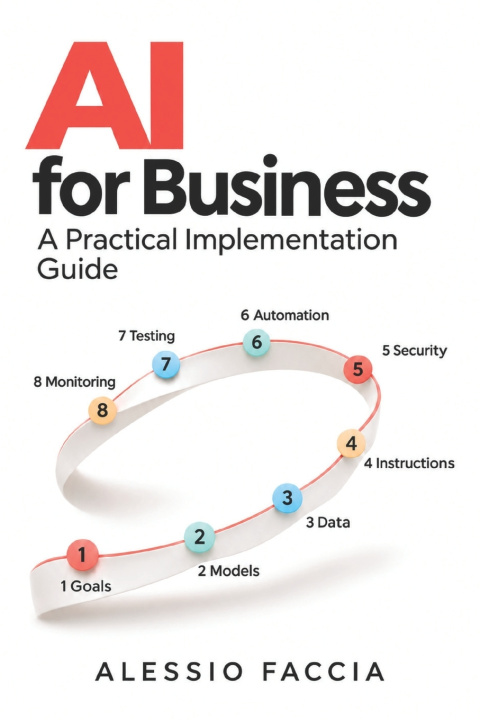
AI for Business
A Practical Implementation Guide: Choosing Models, Connecting Company Data, Automating Tasks and Controlling Costs and Risks
 Inglese
 70 b
 Nuovi
Fino a 30 giorni per il reso

Build a business AI assistant with clear tasks, reliable company knowledge and controlled access to the systems your organisation uses each day.
AI for Business: A Practical Implementation Guide explains how to choose models, connect company data, automate tasks and control costs and risks. Written for managers, business owners, finance professionals, consultants and implementation teams, it follows the decisions involved in taking an AI assistant from an initial requirement into operational use.
Start with the work your organisation needs to complete. Define success criteria, compare models through real business questions, establish API access and spending limits, and write system instructions covering role, tone and scope. Learn how instruction versions and human handover procedures support consistent operation when requirements change or requests need further review.
Connect the assistant with relevant company information. Understand document preparation, embeddings, retrieval-augmented generation (RAG), semantic search, keyword search and source citations through their practical business purpose. Examine how document ownership, validity dates and access restrictions influence the evidence entering each response.
Move into business automation with a clear account of authority. Learn how tools and the Model Context Protocol (MCP) connect assistants with operational systems, and how approval rules govern consequential actions. Follow the relationship between a proposed action, an authorised request and a confirmed result, including the checks needed when a service times out or returns an uncertain status.
Protect customer and employee information throughout the workflow. Map user roles to data permissions, pass trusted identity through tool calls, separate customer records and restrict access to sensitive information. Examine prompt injection in external content, unnecessary disclosure in generated responses and personal data retained in logs or support records.
Bring financial discipline to daily operation. Understand caching and model routing, track responses and tool calls, measure latency and spending, and assess the resources required for a successful business outcome. Account for retries, unsuccessful requests, employee review and integration support when evaluating the cost of the service.
Build an evaluation process around business questions and past failures. Prepare representative test cases, define expected outcomes and examine the evidence supporting each result. Use failed tests to identify corrective work, establish release conditions and prepare recovery procedures before expanding operational use.
Assess AI suppliers through evidence and acceptance criteria. Compare proposals against your workflows, inspect data-handling commitments, test access controls and examine service support, pricing and exit arrangements. Develop a purchasing decision grounded in the configuration and responsibilities your organisation will use.
Practical examples connect the discussion with invoice enquiries, customer records, reimbursement requests, compensation approvals and operational incidents. These scenarios show how ordinary business tasks introduce decisions about evidence, identity, permissions and completion.
The four chapters provide a connected structure for designing an assistant, connecting company knowledge and tools, protecting information and running the service responsibly. Technical concepts appear alongside the business decisions they support, helping managers and technical colleagues establish shared requirements.
Whether you are planning an initial pilot, reviewing an existing assistant or comparing supplier proposals, the book provides a structured basis for specifying requirements, asking precise questions and evaluating results.


Informazioni sul libro
Inglese
Categorie

Regala questo libro oggi stesso
È facile
1 Aggiungi il libro al carrello e scegli la consegna come regalo 2 Ti invieremo subito il buono 3 Il libro arriverà all'indirizzo del destinatarioCiao! Sono Libroamiko, il tuo consulente di libri.
Come posso aiutarti?