
 Contatto
 Come acquistare
Consegna
Guida all'acquisto
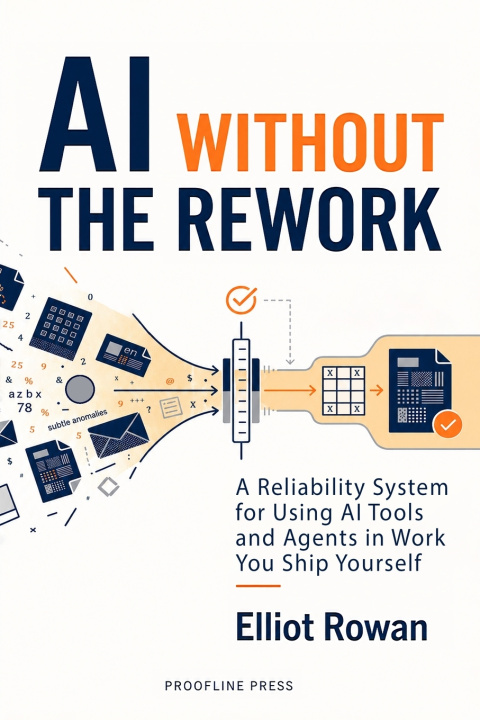
AI Without the Rework
A Reliability System for Using AI Tools and Agents in Work You Ship Yourself
 Inglese
 42 b
42 b
 In preparazione
 Nuovi
Nuovi
Fino a 30 giorni per il reso

AI generates in seconds. Correcting what it generates is where your day goes.
Most guides teach you to prompt better. This one starts from the measurable problem: the gain from AI assistance is made at the point of generation and lost at the point of correction. Re-checking figures, restoring dropped requirements and tracing citations is rework. It is paid in your own attention, it is almost never measured, and it is where the savings go.
AI Without the Rework is written for people who are personally responsible for the result. If nobody sits between your output and your customer, the consequence lands on you. This is a system for deciding what to hand over, briefing it so it comes back usable, and checking it cheaply enough that you still do so on a bad week.
It is not a prompt book. No prompt library appears anywhere in it.
Inside you will find:
- A five-step method: specify, decompose, build, verify, ship
- An honest map of the tool landscape, covering conversational assistants, coding agents, autonomous agents, visual generation and research agents
- The agent layer explained: memory, standing instructions, skills, connections, subagents and hooks
- The delegation test, and the real arithmetic of what AI costs you
- Five output classes and the specific way each one fails
- Machine checks that replace eyeballing, and how to build the check into the build
- Four worked cases: web presence and search, numbers and data, storefront operations, and what to do when AI starts losing money
What is included:
- 28 chapters across six parts, each ending with a Practice section you can act on the same day
- 28 failure cases drawn from real work
- 7 specification templates and 8 verification checklists
- A symptom index entered by what went wrong, not by topic
- A traceability list of sources stating what each source actually establishes, and where the evidence is thin
250 pages, 6 x 9 inches.
Start with the first-week plan and run one task properly before you read anything else.


Informazioni sul libro
Inglese
Categorie
