
 Contatto
 Come acquistare
Consegna
Guida all'acquisto
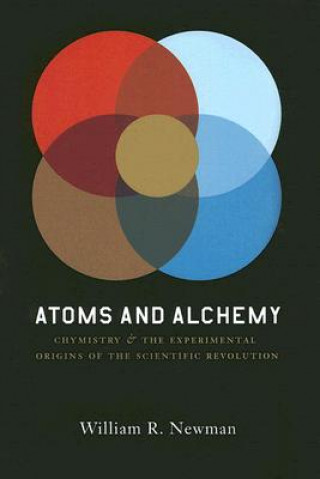
Atoms and Alchemy
Chymistry and the Experimental Origins of the Scientific Revolution
 Inglese
 144 b
144 b
Fino a 30 giorni per il reso
I clienti hanno acquistato anche




Since the Enlightenment, alchemy has been viewed as a sort of antiscience, disparaged by many historians as a form of lunacy that impeded the development of rational chemistry. But, in "Atoms and Alchemy", William R. Newman - a historian widely credited for reviving recent interest in alchemy - exposes the speciousness of these views and challenges widely held beliefs about the origins of the Scientific Revolution. Tracing the alchemical roots of Robert Boyle's famous mechanical philosophy, Newman shows that alchemy contributed to the mechanization of nature, a movement that lay at the very heart of scientific discovery. Boyle and his predecessors - figures like the mysterious medieval Geber or the Lutheran professor Daniel Sennert - provided convincing experimental proof that matter is made up of enduring particles at the microlevel. At the same time, Newman argues that alchemists created the operational criterion of an "atomic" element as the last point of analysis, thereby contributing a key feature to the development of later chemistry. "Atoms and Alchemy" thus provokes a refreshing debate about the origins of modern science and will be welcomed - and deliberated - by all who are interested in the development of scientific theory and practice.


Informazioni sul libro
Inglese

Regala questo libro oggi stesso
È facile
1 Aggiungi il libro al carrello e scegli la consegna come regalo 2 Ti invieremo subito il buono 3 Il libro arriverà all'indirizzo del destinatarioPotrebbe interessarti anche






Ciao! Sono Libroamiko, il tuo consulente di libri.
Come posso aiutarti?