
 Contatto
 Come acquistare
Consegna
Guida all'acquisto
 Inglese
 45 b
45 b
 In preparazione
 Nuovi
Nuovi
Fino a 30 giorni per il reso

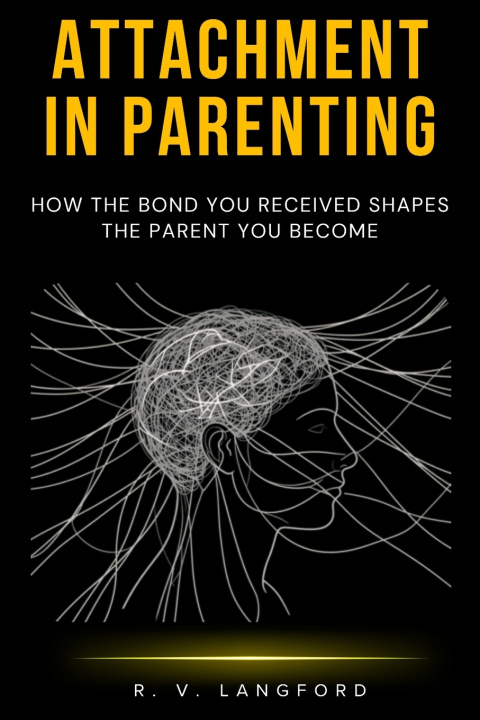
Your attachment history does not determine the parent you become. But it shapes it. This is the science of how that works, and what changes it.
If you grew up with caregiving that was inconsistent, emotionally unavailable, frightening, or simply less than you needed, and if you are now a parent or approaching parenthood, you have likely asked yourself a version of the same question: will I pass this on? The research has a precise answer, and it is neither as alarming as the fear suggests nor as reassuring as you might want. Intergenerational transmission of attachment is real, documented, and mediated by specific psychological processes. Those processes are identifiable. And some of them are modifiable.
This is not a parenting manual and it does not prescribe what to do with your child. It is a rigorous, research-grounded account of the psychological mechanisms by which attachment history shapes caregiving, what the evidence shows about the conditions under which transmission is interrupted, and why the coherence of a parent's narrative about their own past matters more than the content of that past.
What this book covers:
- What van IJzendoorn's meta-analytic research established about the relationship between parental Adult Attachment Interview classification and infant Strange Situation classification, and why the effect is meaningful but not deterministic
- What parental reflective functioning is, how Fonagy and colleagues defined and measured it, and why the capacity to hold the child's mind in mind is the most robust protective factor the research has identified against transmission of insecure attachment
- Why reflective functioning is most available when the parent is calm and collapses most reliably precisely when the child is most distressed and the parent is most activated
- What sensitive caregiving actually means as the research operationalises it, and why it is not perfect caregiving, not the absence of rupture, and not the provision of every need
- What Tronick's still-face research and the repair literature show about why reliable repair of misattunement matters more for secure development than the absence of misattunement
- What the research shows about the specific caregiving challenges that each attachment pattern produces, and what distinguishes parents who transmit insecurity from those who do not
- What the evidence on earned secure parents reveals: that a parent who has processed a difficult history into a coherent account of how it affected them is a significantly better predictor of infant security than a parent who had an easy childhood but has never examined it
- What the research shows about father-infant attachment, multiple attachment figures, and the conditions under which early insecurity can be recovered from across development
R. V. Langford draws on the research of Bowlby, Ainsworth, van IJzendoorn, Fonagy, Tronick, Main, and the developmental psychologists who have mapped the mechanisms of intergenerational transmission, producing the most research-precise account of attachment in parenting available to the general reader.
Readers who want the science of how their past shapes their caregiving, rather than reassurance or a prescriptive programme, will find it here.


Informazioni sul libro
Inglese

Regala questo libro oggi stesso
È facile
1 Aggiungi il libro al carrello e scegli la consegna come regalo 2 Ti invieremo subito il buono 3 Il libro arriverà all'indirizzo del destinatarioCiao! Sono Libroamiko, il tuo consulente di libri.
Come posso aiutarti?