
 Contatto
 Come acquistare
Consegna
Guida all'acquisto
 Inglese
 132 b
132 b
 Nuovi
Nuovi
Fino a 30 giorni per il reso

Banks fail. Regularly. And the stress tests they pass are rarely tests of the ways they actually die.
Silicon Valley Bank lost 81% of its deposits in two days. It had never sat a supervisory stress test = under the rules of the time, it wasn't judged to need one. Dexia passed the European exercise and required rescue three months later. The pattern is not bad luck; it is a discipline answering the wrong questions with great precision.
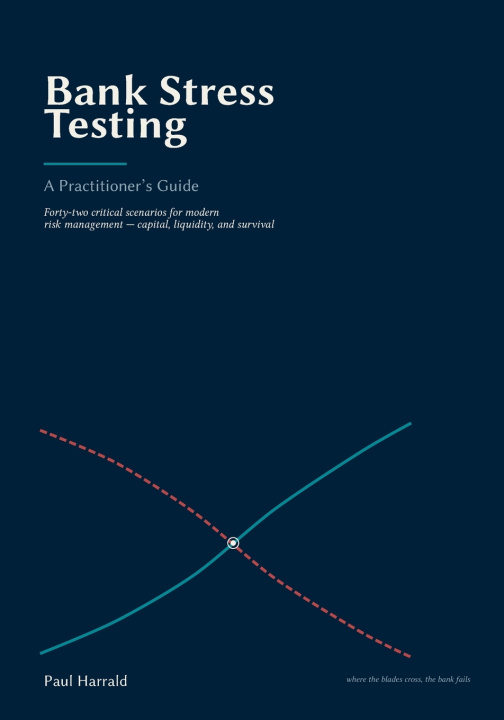
Bank Stress Testing: A Practitioner's Guide is a field manual for asking the right ones. At its core are forty-two critical scenarios - digital bank runs, CRE collapse, sanctions, cyber warfare, CCP default, deepfakes, AI model monoculture - each classified on four axes (what binds, how fast, where it comes from, who else is in it) so the analysis assembles itself, and each with a differential-impact table showing why the same stress means different things to a global balance sheet and a regional one. The run that kills a regional lender delivers flight-to-quality inflows to the largest banks; the book keeps both columns honest.
Two banks are worked end to end, hour by hour and quarter by quarter: Aurora, which dies of liquidity in a single Thursday, and Meridian, which dies of capital over nine quarters - slowly, then suddenly. Around them sits the doctrine most stress-testing books skip: what capital and liquidity are actually for (keeping the creditor's wind-up option unexercised), why the accounts must tell the truth ("you don't reduce speeding by altering speedometers"), how to read a bank's financial statements as a strike map, how to stress-test the strategy before the concentration exists, and why no plan survives contact with the crowd, because your contingency funding plan is excellent, and unfortunately it is also everyone else's.
Inside: the anatomy of fifteen historical failures and their recurring pipeline · a fully worked digital-run template with hourly outflow mechanics · reverse stress testing, and its extension to the strategic plan · the ICAAP, ILAAP and regulatory exercises, made useful · climate and AI-risk deep dives with reproducible models · the digital twin of a bank balance sheet and the library at a glance: one page that tells you which five of the forty-two are yours.
Written for CROs, treasurers, CFOs, ALCO and board members, supervisors, and anyone who must defend a stress number in a room that would prefer comfort. The job is not to predict the future. The job is to ensure the institution survives the futures that are coming for it ... and to know, before your depositors do, what they would find if they looked.


Informazioni sul libro
Inglese

Regala questo libro oggi stesso
È facile
1 Aggiungi il libro al carrello e scegli la consegna come regalo 2 Ti invieremo subito il buono 3 Il libro arriverà all'indirizzo del destinatarioCiao! Sono Libroamiko, il tuo consulente di libri.
Come posso aiutarti?