
 Contatto
 Come acquistare

Consegna
Guida all'acquisto
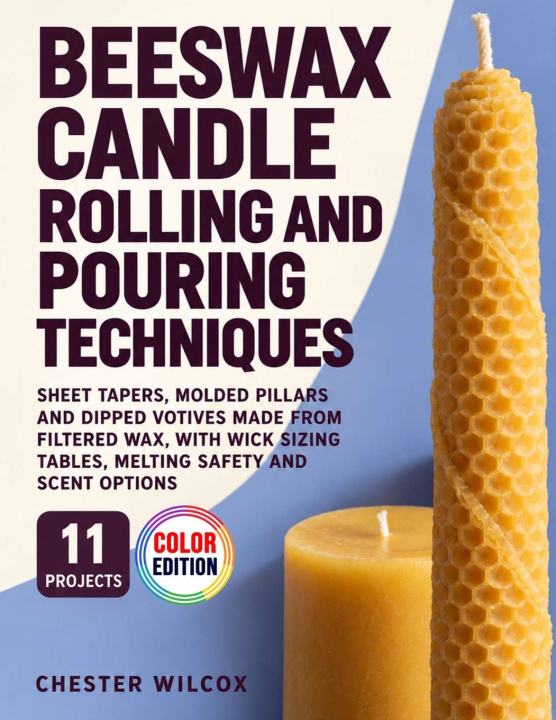
Beeswax Candle Rolling and Pouring Techniques
Sheet Tapers, Molded Pillars and Dipped Votives Made from Filtered Wax, with Wick Sizing Tables, Melting Safety and Scent Options
 Inglese
 64 b
 In preparazione
 Nuovi
Fino a 30 giorni per il reso

Most candle makers expect a printed chart to name the right wick and expect beeswax to burn like the soy or paraffin wax they poured before, and neither expectation survives a first test burn in a real kitchen with a real thermometer and your own wax.
The suppliers' own wick charts say so: the sizes listed are for beeswax only, and mold style, dye, and fragrance each change the size a candle needs. This book treats every chart as a place to begin and teaches the test burn that settles the question, three to four hours at a time, with the wax hardening between burns. No chart can know your wax batch, your mold, or your colorant, so every size here is called a starting point, and the same habit runs through rolling, pouring, and dipping.
What the Test Burns Actually Show
- A rolled candle about 1 inch wide has three published starting wicks, 1/0, 2/0, and #2, and only the burn tells you which one your wax wants.
- A 3 inch pillar sits on the border of two published wick sizes, so the book pours small test pillars with both before it commits a full pour.
- Beeswax shrinks little, so a poured pillar needs its crater topped up once or twice, not the four or five times other waxes can demand of you.
- Hotter is not better: wax past 185 F may darken, and a dipping vat that runs too hot will not build a coat on the wick however many times you dip.
- A tunnel in the first burn usually points to a wick too small for the width, or a candle put out before the melt pool reached the edge of the candle.
- Plain wax comes first, because added color and added scent each change the wick a candle needs, so each gets its own test burn and its own log entry.
Once you know that, the methods stop reading as recipes and start working as a routine: set up the station, measure the mold, test the wick, burn the candle, and write down what you saw. Eleven projects put the routine to work, one candle at a time, and each is measured before it is lit.
Eleven Candles, Three Methods
- Four rolled candles, from a straight starter to a wide pillar rolled from two full 8 by 16 inch sheets, each with a test wick pair.
- Four molded pillars, 2 to 4 inches wide, including a two-tone pillar poured in white and yellow beeswax, with wax weights worked out.
- Three dipped sets: a classic taper pair, four short votives, and a taper pair overdipped in a second shade, with a dip log to copy.
- Sixteen chapters, with wick sizing tables, round pillar mold wax weights, a project index, and troubleshooting tables for each method.
The rest of the book supports that routine. You render cappings from a hive through cheesecloth, melt wax in a water bath with a thermometer, weigh essential oils by flash point, and choose between aluminum and silicone molds. It is written for beginners, in plain natural wax with its mild honey scent, as a DIY craft for adults who want to make candles at a home stove and know why each one burned the way it did, and what to change next time.
Press a warmed sheet between your palms and feel it turn pliable, then roll your first candle.


Informazioni sul libro
Inglese

Regala questo libro oggi stesso
È facile
1 Aggiungi il libro al carrello e scegli la consegna come regalo 2 Ti invieremo subito il buono 3 Il libro arriverà all'indirizzo del destinatarioCiao! Sono Libroamiko, il tuo consulente di libri.
Come posso aiutarti?