
 Contatto
 Come acquistare

Consegna
Guida all'acquisto
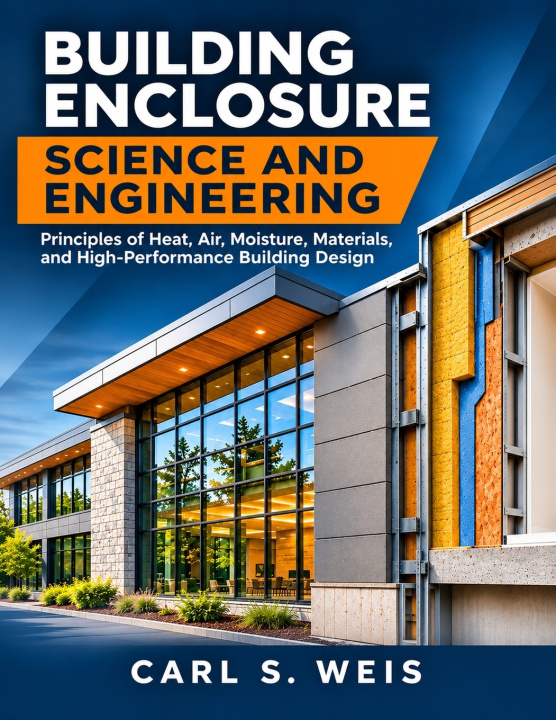
BUILDING ENCLOSURE SCIENCE AND ENGINEERING
Principles of Heat, Air, Moisture, Materials, and High Performance Building Design
 Inglese
 269 b
 In preparazione
 Nuovi
Fino a 30 giorni per il reso

A high-performance building enclosure is more than a collection of walls, roofs, windows, and foundations. Its success depends on how heat, air, moisture, rain, materials, climate, construction, and building systems interact. When these relationships are misunderstood, the result can be condensation, water intrusion, energy loss, premature deterioration, poor comfort, and costly failures.
BUILDING ENCLOSURE SCIENCE AND ENGINEERING provides a practical, engineering-focused approach to understanding these interactions and applying building-science principles to real design, investigation, and performance challenges. Rather than relying on isolated rules or preferred products, the book develops a systematic framework for evaluating enclosure performance from environmental loads and control layers through construction, testing, rehabilitation, and commissioning.
Readers will explore how heat, air, and moisture move through building assemblies and how effective control strategies can improve energy performance, durability, resilience, and occupant comfort. Fundamental building physics is connected to practical applications across walls, roofs, foundations, windows, curtain walls, joints, penetrations, and critical interfaces.
Inside, you will learn how to:
- Understand heat transfer, thermal resistance, effective performance, thermal bridging, and condensation risk
- Evaluate airflow, leakage paths, pressure differences, and air-barrier system continuity
- Apply moisture-control principles involving vapour transport, drying potential, hygrothermalbehaviour, and condensation
- Manage rainwater through drainage, rainscreens, flashings, water-shedding surfaces, and effective detailing
- Evaluate walls, roofs, foundations, fenestration, curtain walls, materials, and critical enclosure interfaces
- Investigate performance problems using moisture mapping, infrared thermography, airtightness testing, water-penetration testing, monitoring, and causal analysis
- Approach rehabilitation and energy retrofits while considering moisture balance, durability, and long-term performance
- Integrate enclosure design with quality assurance, field testing, commissioning, maintenance, and resilience
With particular attention to Canadian climatic conditions, SI units, climate-responsive design, and code-aware professional practice, the book emphasizes performance-based reasoning rather than one-size-fits-all construction solutions.
BUILDING ENCLOSURE SCIENCE AND ENGINEERING is designed for engineering and building-science students, practicing engineers, architects, building-enclosure consultants, contractors, commissioning providers, facility professionals, and technically advanced builders seeking a structured reference for design, calculations, field investigations, diagnostics, rehabilitation, and performance verification.
Develop a stronger understanding of how building enclosures work and a systematic approach to designing, evaluating, diagnosing, and improving buildings for energy performance, moisture control, durability, and long-term service.


Informazioni sul libro
Inglese

Regala questo libro oggi stesso
È facile
1 Aggiungi il libro al carrello e scegli la consegna come regalo 2 Ti invieremo subito il buono 3 Il libro arriverà all'indirizzo del destinatarioCiao! Sono Libroamiko, il tuo consulente di libri.
Come posso aiutarti?