
 Contatto
 Come acquistare
Consegna
Guida all'acquisto
 Inglese
 52 b
52 b
Fino a 30 giorni per il reso
I clienti hanno acquistato anche
















 /
/
 Rigido
 23.49
€
23.49
€




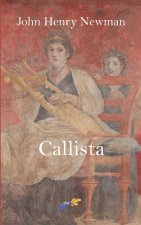




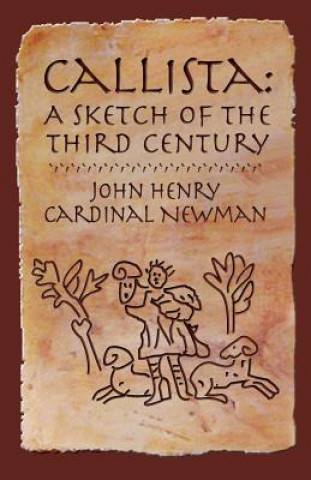
Recently "beatified" by the Catholic Church - one step away from official recognition as a saint - the life of John Henry Newman (1801-1890) paralleled the return of Catholicism to England as a legally recognized religion. As a leading figure in the Oxford Movement, an effort that sought to return the Church of England to its historical roots, and later as one of the more important Catholic writers, Newman worked to present his own position to his co-religionists, and to give an understanding of Catholicism to non-Catholic English men and women. His efforts are, in large measure, credited with making Catholicism acceptable, even respectable, in quarters where there had previously been only hostility. People of every faith mourned his death in 1890. "Callista" is a "Catholic" version of the "Early Christian Romance" genre that was popular in the nineteenth century. Most such productions rarely rose above the quality of Edward Bulwer-Lytton's "The Last Days of Pompeii" or Charles Kingsley's "Hypatia." Some authorities credit Kingley's jealousy over the success of "Callista" and the obvious quality of Newman's novel in contrast to his own as the source of Kingsley's later violent attacks on Newman, to which Newman responded with his monumental "Apologia Pro Vita Sua," one of the greatest "spiritual autobiographies" ever written. "Callista" not only exhibits a high degree of literary accomplishment and historical accuracy, but is entertaining. This edition features a foreword by Michael D. Greaney, Director of Research for the Center for Economic and Social Justice in Arlington, Virginia, USA.


Informazioni sul libro
Inglese

Regala questo libro oggi stesso
È facile
1 Aggiungi il libro al carrello e scegli la consegna come regalo 2 Ti invieremo subito il buono 3 Il libro arriverà all'indirizzo del destinatarioPotrebbe interessarti anche


 /
In brossura
24.79
€
/
In brossura
24.79
€



 /
In brossura
160.89
€
/
In brossura
160.89
€
Ciao! Sono Libroamiko, il tuo consulente di libri.
Come posso aiutarti?