
 Contatto
 Come acquistare
Consegna
Guida all'acquisto
 Inglese
 23 b
23 b
 Nuovi
Nuovi
Fino a 30 giorni per il reso
I clienti hanno acquistato anche





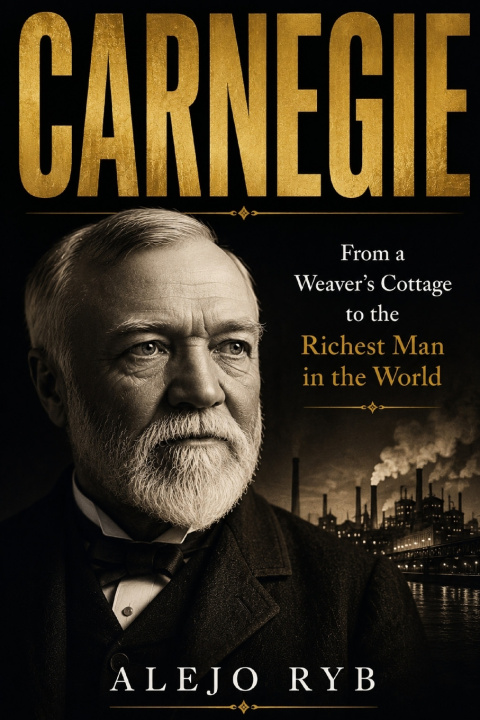
Andrew Carnegie was thirteen when he arrived in America with almost nothing. He worked twelve-hour days in a cotton mill for $1.20 a week, the air so thick with lint it coated the inside of his mouth. He had little formal education. On Saturdays he borrowed books. He taught himself skills nobody had asked him to learn and found his way into the rooms where information, capital, and opportunity were moving fastest.
Decades later he controlled the most powerful steel enterprise in America and was, for a time, the richest man alive. Making the fortune was only half of what he set out to do.
Carnegie believed wealth came with an obligation. After building one of the great fortunes of the industrial age, he tried to give most of it away: libraries, universities, scientific institutions, concert halls, projects meant to outlast him.
CARNEGIE tells both stories. It follows the immigrant boy from a weaver's cottage in Dunfermline through the telegraph office, the railroad, the Bessemer converters, Carnegie Steel, the violence at Homestead, the creation of U.S. Steel, and the long campaign to give the money away.
It also presses the question the legend usually skips. What, if anything, can you actually take from the way he operated?
Stay close to where decisions are made. Master the unglamorous work other people ignore. Treat information as capital. Concentrate when you have an advantage. Watch costs without mercy. Expand when competitors pull back. Put exceptional people beside you. Know when accumulation has gone far enough.
Those habits built an empire. They also left a wreckage.
Carnegie could write with real feeling about the dignity of ordinary people while men in his mills worked under conditions that would break most of us. He became one of history's great philanthropists and Homestead still happened. The libraries do not cancel the bloodshed. The bloodshed does not make the libraries disappear.
That is why the book is more useful than a success story. It is the life of a man who spent one lifetime on two questions he never quite finished answering: how do you build a fortune, and once you have built it, what is it for?


Informazioni sul libro
Inglese

Regala questo libro oggi stesso
È facile
1 Aggiungi il libro al carrello e scegli la consegna come regalo 2 Ti invieremo subito il buono 3 Il libro arriverà all'indirizzo del destinatarioPotrebbe interessarti anche

 /
/
 In brossura
 39.09
€
39.09
€




Ciao! Sono Libroamiko, il tuo consulente di libri.
Come posso aiutarti?