
 Contatto
 Come acquistare
Consegna
Guida all'acquisto
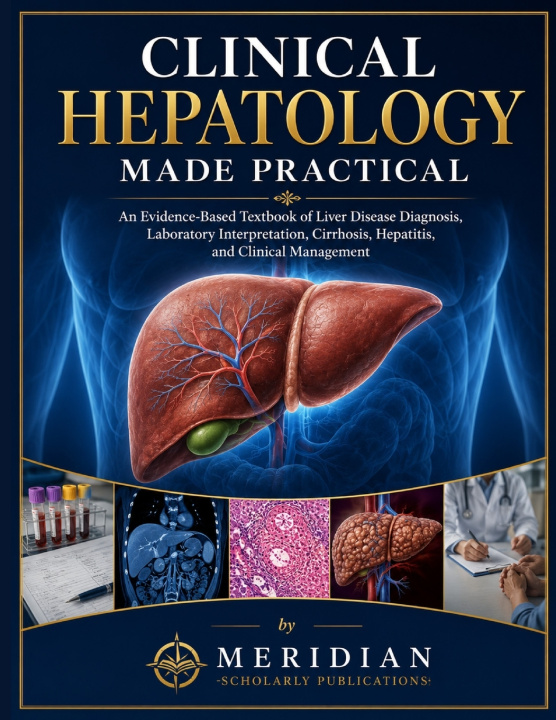
CLINICAL HEPATOLOGY MADE PRACTICAL
An Evidence-Based Textbook of Liver Disease Diagnosis, Laboratory Interpretation, Cirrhosis, Hepatitis, and Clinical Management
 Inglese
 372 b
372 b
 Nuovi
Nuovi
Fino a 30 giorni per il reso

Clinical Hepatology Made Practical is a comprehensive, university-level textbook designed to make the diagnosis, interpretation, and management of liver disease easier to understand and apply in real clinical settings.
Written for medical students, nursing students, pharmacy students, biomedical science students, allied health professionals, trainees, and clinicians seeking a structured review of hepatology, this book combines essential liver science with practical clinical reasoning. Rather than presenting liver disorders as isolated facts, it explains how anatomy, physiology, laboratory abnormalities, imaging findings, pathology, symptoms, complications, and treatment decisions connect in everyday patient care.
Beginning with functional liver anatomy, hepatic physiology, mechanisms of injury, fibrosis, and clinical assessment, the book gradually progresses into the interpretation of liver biochemical tests, serology, imaging, elastography, histopathology, and diagnostic procedures. Readers are guided through the major causes of acute and chronic liver disease, including viral hepatitis, autoimmune hepatitis, drug-induced liver injury, alcohol-associated liver disease, metabolic dysfunction-associated steatotic liver disease, genetic disorders, cholestatic conditions, vascular disorders, and infectious and parasitic diseases.
Special attention is given to cirrhosis and its major complications, including portal hypertension, variceal hemorrhage, ascites, spontaneous bacterial peritonitis, hepatorenal dysfunction, hepatic encephalopathy, malnutrition, sarcopenia, acute liver failure, and acute-on-chronic liver failure. The textbook also provides detailed coverage of hepatocellular carcinoma, cholangiocarcinoma, liver transplantation, liver disease in pregnancy, pediatric and adolescent hepatology, liver disease in older adults, pharmacotherapy, procedural hepatology, nutrition, rehabilitation, and multidisciplinary care.
A major strength of this book is its focus on clinical interpretation and decision-making. Readers learn how to distinguish hepatocellular, cholestatic, and mixed patterns of liver injury; interpret bilirubin, albumin, INR, aminotransferases, alkaline phosphatase, GGT, viral markers, and specialized tests; assess the severity of cirrhosis; recognize clinical deterioration; and construct meaningful differential diagnoses.
The final sections strengthen practical understanding through clinical case studies, diagnostic challenges, laboratory interpretation exercises, imaging-based hepatology cases, integrated differential diagnosis exercises, chapter review questions, advanced self-assessment questions, explanatory answer rationales, a comprehensive glossary, common laboratory reference values, clinical scoring systems, diagnostic tables, and an extensive list of abbreviations and acronyms.
Inside this textbook, readers will develop a clearer understanding of:
1. Functional liver anatomy, physiology, metabolism, and bilirubin handling
2. Clinical assessment of patients with suspected liver disease
3. Interpretation of abnormal liver biochemical tests and viral serology
4. Ultrasonography, CT, MRI, MRCP, elastography, and liver biopsy
5. Hepatitis A, B, C, and E
6. Autoimmune and drug-induced liver disease
7. Alcohol-associated and metabolic liver disease
8. Wilson disease, hemochromatosis, and alpha-1 antitrypsin deficiency
Whether used as a core academic textbook, a clinical reference, or a structured resource for advanced study, this book provides a practical and evidence-based foundation for understanding modern hepatology.


Informazioni sul libro
Inglese

Regala questo libro oggi stesso
È facile
1 Aggiungi il libro al carrello e scegli la consegna come regalo 2 Ti invieremo subito il buono 3 Il libro arriverà all'indirizzo del destinatarioCiao! Sono Libroamiko, il tuo consulente di libri.
Come posso aiutarti?