
 Contatto
 Come acquistare

Consegna
Guida all'acquisto
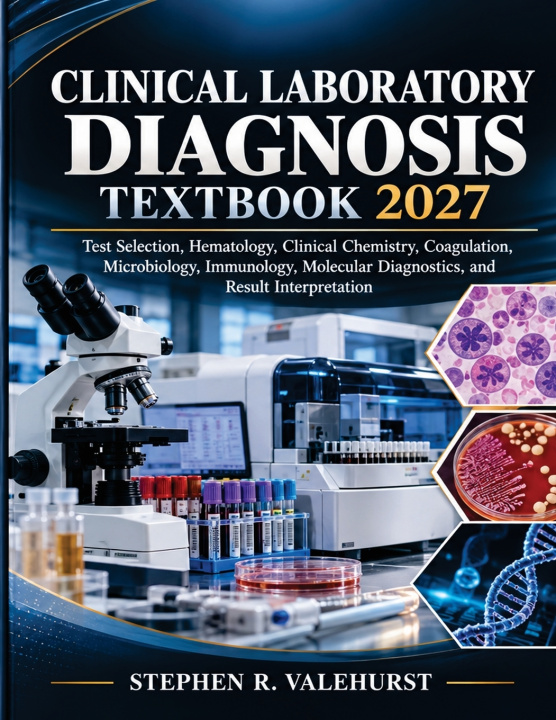
Clinical Laboratory Diagnosis Textbook 2027
Test Selection, Hematology, Clinical Chemistry, Coagulation, Microbiology, Immunology, Molecular Diagnostics, and Result Interpretation
 Inglese
 456 b
 In preparazione
 Nuovi
Fino a 30 giorni per il reso

Every laboratory result begins with a choice: what to measure, and why.
A blood count, a chemistry panel, a coagulation study, and a microbiology report answer different questions. Understanding their contribution requires attention to the reason for testing, the findings themselves, and the clinical context in which they appear.
Clinical Laboratory Diagnosis Textbook 2027 places test selection and result interpretation at the center of laboratory learning. Bringing together hematology, clinical chemistry, coagulation, microbiology, immunology, and molecular diagnostics, it provides a broad foundation for examining how laboratory evidence contributes to diagnostic assessment.
The emphasis is on purposeful use of information. A result becomes useful when you can relate it to the question being investigated, consider its significance alongside other findings, and recognize where uncertainty remains. That approach gives both learners and practicing professionals a clear reason to revisit the fundamentals.
Across the major testing disciplines, explore:
Test selection and diagnostic purpose: Connect the investigation being considered with the information needed to assess a clinical problem.
Hematology and coagulation: Examine blood findings and hemostatic investigations as complementary sources of diagnostic evidence.
Clinical chemistry: Develop your understanding of biochemical measurements and their relevance to the assessment of organ function and metabolic disturbance.
Microbiology and immunology: Consider the contributions of organism detection and immune investigations to the evaluation of disease.
Molecular diagnostics: Place molecular findings within the broader process of investigation and interpretation.
For medical laboratory science students, medical students, residents, and clinicians who use laboratory reports, this textbook offers a common focus across several disciplines: making sense of the evidence a test provides. Its scope suits foundational study, preparation for laboratory and clinical discussions, and review of subjects outside your usual area of work.
Read across disciplines to build a broader understanding, or return to a particular subject when you need to refresh its principles. Keeping test choice and interpretation connected helps give individual facts a practical place in your learning.
Use this textbook to approach your next laboratory review with a clearer purpose for each investigation and a more considered reading of its findings.


Informazioni sul libro
Inglese

Regala questo libro oggi stesso
È facile
1 Aggiungi il libro al carrello e scegli la consegna come regalo 2 Ti invieremo subito il buono 3 Il libro arriverà all'indirizzo del destinatarioCiao! Sono Libroamiko, il tuo consulente di libri.
Come posso aiutarti?