
 Contatto
 Come acquistare
Consegna
Guida all'acquisto
 Inglese
 54 b
54 b
 Nuovi
Nuovi
Fino a 30 giorni per il reso

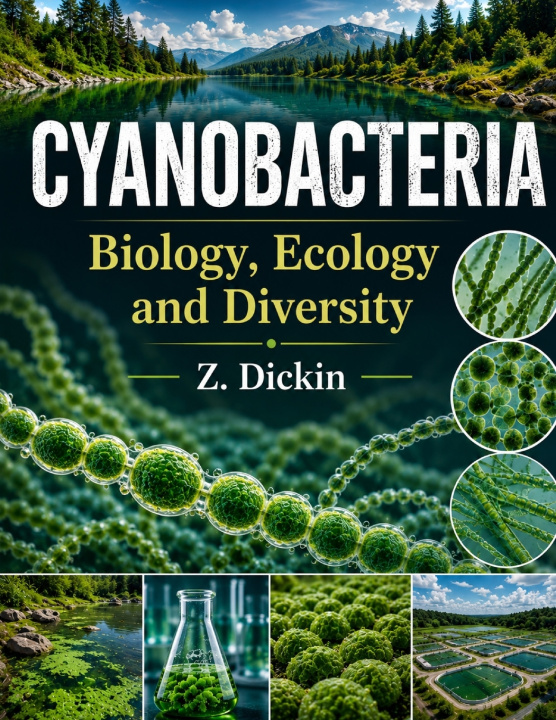
Cyanobacteria represent one of the most fascinating and ancient groups of microorganisms on Earth. Often referred to as blue-green algae, these remarkable organisms have played a fundamental role in shaping the history of life by producing oxygen through photosynthesis and contributing to the transformation of Earth's atmosphere. Their evolutionary success, ecological importance, and biotechnological potential make them an essential subject of modern biological research.
This book, "Cyanobacteria: Biology, Ecology and Diversity", has been developed to provide a comprehensive understanding of cyanobacteria, covering their structure, classification, physiology, genetics, ecology, environmental significance, and industrial applications. The aim of this book is to present scientific concepts in a clear, organized, and accessible manner for students, researchers, educators, and readers interested in microbial biology.
The book begins with the fundamental characteristics of cyanobacteria, including their cellular organization, diversity, photosynthetic mechanisms, and evolutionary history. It explains how these microorganisms have survived for billions of years and how their activities have influenced global biological processes such as oxygen production, carbon cycling, and nitrogen fixation.
Special attention has been given to the ecological roles of cyanobacteria in aquatic and terrestrial environments. Their contributions to nutrient cycling, soil fertility, ecosystem restoration, and climate regulation are discussed in detail. The book also examines harmful cyanobacterial blooms, toxin production, and their effects on water quality and human health.
Modern applications of cyanobacteria are an important focus of this work. The chapters explore their use in biofertilizers, renewable energy production, carbon capture technologies, wastewater treatment, food and nutrition, pharmaceuticals, and industrial biotechnology. Advances in genomics, genetic engineering, synthetic biology, and molecular techniques are also discussed to highlight the future possibilities of cyanobacterial research.
The growing challenges of climate change, environmental pollution, energy demands, and food security require sustainable biological solutions. Cyanobacteria offer promising opportunities because of their ability to utilize sunlight, capture carbon dioxide, and produce valuable biological products. Understanding their biology and applications can help develop innovative technologies for a sustainable future.
This book has been prepared with the intention of providing a valuable learning resource while encouraging further exploration and research in the field of cyanobacterial science. It is hoped that readers will gain a deeper appreciation of these extraordinary microorganisms and recognize their importance in both natural ecosystems and modern biotechnology.
Author


Informazioni sul libro
Inglese

Regala questo libro oggi stesso
È facile
1 Aggiungi il libro al carrello e scegli la consegna come regalo 2 Ti invieremo subito il buono 3 Il libro arriverà all'indirizzo del destinatarioCiao! Sono Libroamiko, il tuo consulente di libri.
Come posso aiutarti?