
 Contatto
 Come acquistare

Consegna
Guida all'acquisto
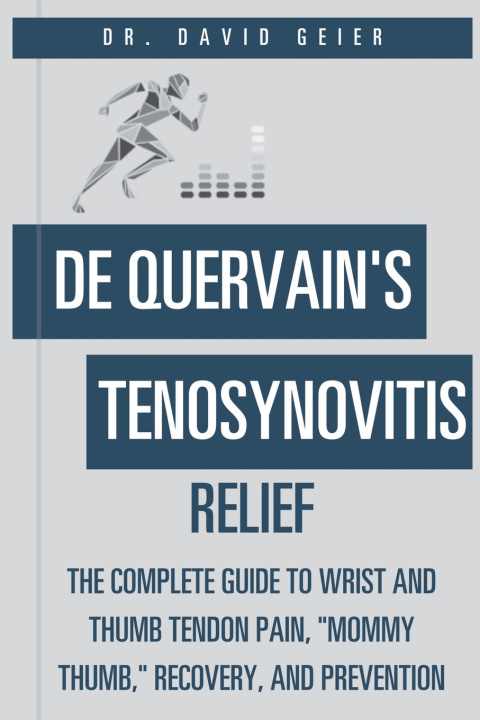
De Quervain's Tenosynovitis Relief
The Complete Guide to Wrist and Thumb Tendon Pain, "Mommy Thumb," Recovery, and Prevention
 Inglese
 38 b
 In preparazione
 Nuovi
Fino a 30 giorni per il reso

Almost nobody remembers doing anything.
With a torn ligament there is a moment - a pop, a fall, a date on the calendar. With De Quervain's tenosynovitis, the pain simply shows up on the thumb side of the wrist one week and refuses to leave.
A new mother notices it around week eight and is told to wait until she stops breastfeeding. A flooring contractor works through it for six weeks until a coffee cup slips out of his hand. A college student who has never played a sport discovers her thumb has quietly stopped being an option.
Most of them are handed a diagnosis and about four minutes of explanation.
Dr. David Geier is a triple board-certified orthopedic surgeon and sports medicine specialist, and the author of That's Gotta Hurt: The Injuries That Changed Sports Forever. In this guide, he walks readers through what has actually gone wrong inside that inch of tendon, why the condition's own name has misled patients for more than a century, and which treatments hold up under scrutiny.
Inside this book:
- The anatomy of the first dorsal compartment, and why "tenosynovitis" is a misleading name that drives poor treatment decisions
- The exact position that causes this, and why the trigger is usually a change in load rather than the load itself
- Why a standard drugstore wrist brace cannot treat this condition, and what to wear instead
- The conditions routinely mistaken for De Quervain's - thumb basal joint arthritis, intersection syndrome, nerve problems - and how they are told apart
- A staged loading program that rebuilds tendon capacity rather than simply calming symptoms, with clear rules for when to advance and when to back off
- Why corticosteroid injections fail, and the anatomical variation present in a large share of wrists that explains most of it
- What ultrasound guidance changes, and when it matters most
- An honest assessment of regenerative treatments including PRP, cell-based injections, and shockwave therapy, written by a physician who offers them and states plainly where the evidence is thin
- Surgery explained without the dread: the decision framework, the operation, anesthesia options, and a realistic week-by-week recovery
- The systemic factors that quietly govern healing - blood sugar, thyroid function, sleep, nutrition, and the mindset patterns that extend recovery
- Return-to-activity plans for lifting a child, the gym, golf, racket sports, climbing, yoga, and physically demanding work
- A maintenance program that takes minutes a week, plus an early-warning system for catching a flare in week one instead of month three
New parents and caregivers. Nurses, hygienists, stylists, chefs, teachers, and tradespeople. Golfers, climbers, lifters, cyclists, and racket sport players. Desk workers, students, and anyone who has been told to simply wait it out.
Dr. Geier's approach is consistent throughout: where the evidence is strong, he says so. Where it is thin, he says that too. And rather than telling readers to stop being active, he focuses on how to keep going - modified, protected, and sustainable for years.
Trackers, exercise protocols, and question sheets to bring to a physician appointment are built into every stage.
Thumb-side wrist pain does not have to run your day. Understanding what is happening, and what can actually be done about it, is where that changes.
This book is general information and education. It is not medical advice, and it cannot account for any individual's specific condition, history, or circumstances. Readers should consult their own physician or hand therapist for guidance about their own wrists. Nothing in this book should be used to delay or replace evaluation by a qualified medical professional.


Informazioni sul libro
Inglese

Regala questo libro oggi stesso
È facile
1 Aggiungi il libro al carrello e scegli la consegna come regalo 2 Ti invieremo subito il buono 3 Il libro arriverà all'indirizzo del destinatarioCiao! Sono Libroamiko, il tuo consulente di libri.
Come posso aiutarti?