
 Contatto
 Come acquistare
Consegna
Guida all'acquisto
 Inglese
 52 b
52 b
 In preparazione
 Nuovi
Nuovi
Fino a 30 giorni per il reso

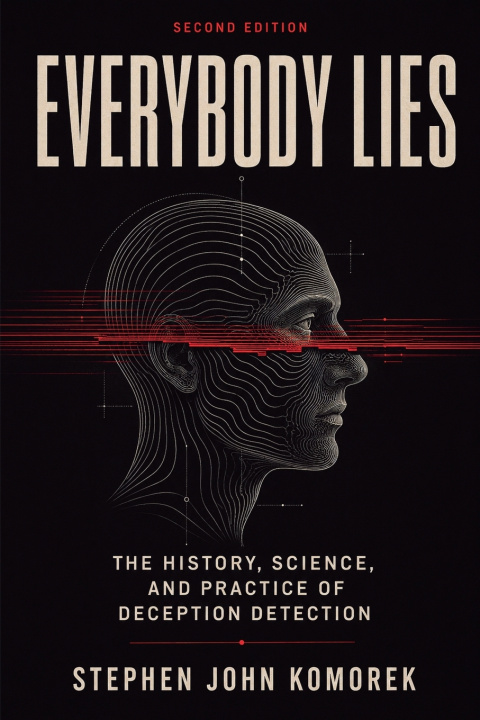
Someone lied to you today.
Maybe a colleague. Maybe a client. Maybe someone who loves you. You did not notice-and that is not a failure of instinct. It is how deception works.
Here is what should unsettle you: when researchers tested nearly 25,000 people on their ability to distinguish lies from truth, the average accuracy was only 54 percent. A coin flip gets 50. Confidence did not make people more accurate.
Everything you think you know about catching a liar-the shifting eyes, fidgeting hands, nervous movements, or story told too smoothly-comes largely from folklore that has been tested and did not survive.
This book is about what does.
Over more than two decades in investigations and intelligence work, Stephen John Komorek has sat across from people with everything to lose: fraudsters, spies, corporate executives, witnesses, and ordinary people facing the worst moments of their lives. He has watched skilled professionals get deception catastrophically wrong-and learned the difference between a hunch and a defensible finding.
Everybody Lies, Second Edition takes readers from the river ordeals of ancient Babylon to the interview rooms of modern intelligence services-through the invention of the polygraph, the development of behavioral science, and the case files of some of the most damaging traitors in American history: Aldrich Ames, Robert Hanssen, and Ana Montes.
Along the way, you will discover why the most dangerous person in an interview may be the one asking the questions; why watching someone more closely can make you worse at judging them; why a system reporting 92 percent accuracy failed to identify even one innocent person in its strongest sample; and why the real skill was never simply spotting a lie. It is learning how to identify and track the pattern, understand the person behind it, and ask questions a deceptive story cannot easily survive.
Grounded in more than 100 sources-including peer-reviewed studies, major meta-analyses, current scientific reviews, and research from leading deception scientists-this Second Edition separates evidence from folklore.
You will learn how to:
• Recognize and track patterns of potential deception
• Read behavior without relying on body-language myths
• Identify meaningful changes in language, emotion, timelines, and behavior
• Determine where an account stops aligning with itself or the known facts
• Understand the person behind the story and what motivates them
• Identify what they may be gaining, protecting, concealing, or avoiding
• Determine how a deceptive account may have been constructed and why
• Use structured questioning to uncover missing and testable information
• Identify the records, witnesses, communications, and evidence that may reveal the truth
• Use known evidence strategically to expose contradictions and obtain admissions
At the center of the book is the Komorek Method: a five-phase framework developed through more than twenty years of professional experience and examined against published research. It does not promise a magical ability to read minds or identify lies from a single behavior. It teaches you how to locate where potential deception may be concentrated, recognize the pattern it creates, understand its likely purpose, and determine what should be investigated next.
This is not a book of tells and tricks. There are none-and anyone selling them is selling something.
It is a book about how truth surfaces, why people hide it, and how disciplined observation, strategic questioning, and independent evidence can bring it into view.
The pattern shows you where to look. The questions uncover the story. The evidence proves what happened.
Everybody lies. Truth leaves a pattern.


Informazioni sul libro
Inglese
