
 Contatto
 Come acquistare
Consegna
Guida all'acquisto
Figures
 Tedesco
 150 b
150 b
Fino a 30 giorni per il reso
I clienti hanno acquistato anche






 /
/
 In brossura
 23.99
€
23.99
€





 /
In brossura
12.79
€
/
In brossura
12.79
€









 /
In brossura
15.89
€
/
In brossura
15.89
€










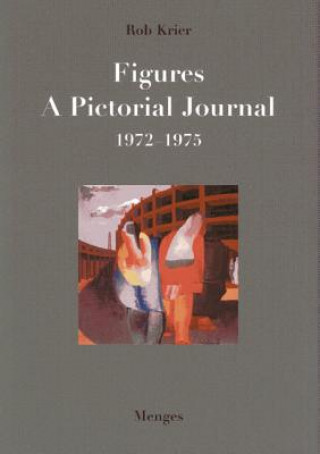
The architect is at all times also an artist. How otherwise would he be able to tame the three-dimensionality of space and subdue theurges of physics and structural mechanics with the creations of hisfantasy? This creativity is however mostly restricted purely to itsown field.Rob Krier, is an exception. Since the beginning of his career inconstruction, he has always seen his love of art as a vocation ż onewhich he nurtures parallel to his work. Fine art should stand in dialoguewith architecture and it is Krierżs ambition to have iconographicthemes brought into the latter, so that they might speak equallyto both the occupants of a building and to bystanders, movingthem to thoughtful reflection.In his Pictorial Journal 1954ż1971, Rob Krier describs in compellingwords and pictures how he came to have a twin passion forfine art and architecture and told of his grammar school years inEchternach, his studies in Munich and his first taste of professionallife with Oswald Mathias Ungers and Frei Otto. In his Pictorial Journal1954ż1971, which covers the period of Krierżs work as a lecturerand assistant to Prof. Johannes Uhl at Stuttgart University, the textis restricted to a minimum. The pictures are less colourful, morecomposed. The »daily scribbles« dominate ż mainly sketches anddrawings of people and animals, buildings, landscapes, objects andalso fantasies. The volume is rounded off with a detailed résumé.Born and raised in Luxembourg, Krier moved to Vienna after havingstudied in Munich and worked for Oswald Mathias Ungers andFrei Otto. After teaching posts in Stuttgart and Lausanne, he wasa professor at the Technische Universität in Vienna from 1976 to1998 and, in 1986, held a guest professorship at Yale University inNew Haven, Mass. Krier has developed urban-design concepts forStuttgart, Vienna, Berlin, Amiens, Montpellier, Leeds, Gothenburg,Lodz, Amsterdam, Den Haag and many other cities. Projects withwhich he was first able to translate his vision of a spatial concept,such as Rauchstrasse in Berlin, Breitenfurterstrasse in Vienna orRitterstrasse with Schinkelplatz in Berlin, repeatedly found theirplace in international publications.


Informazioni sul libro
Tedesco

Regala questo libro oggi stesso
È facile
1 Aggiungi il libro al carrello e scegli la consegna come regalo 2 Ti invieremo subito il buono 3 Il libro arriverà all'indirizzo del destinatarioPotrebbe interessarti anche






 /
In brossura
58.29
€
/
In brossura
58.29
€

 /
In brossura
49.79
€
/
In brossura
49.79
€










 /
Rigido
47.49
€
/
Rigido
47.49
€



Ciao! Sono Libroamiko, il tuo consulente di libri.
Come posso aiutarti?