
 Contatto
 Come acquistare
Consegna
Guida all'acquisto
 Inglese
 267 b
267 b
Fino a 30 giorni per il reso
I clienti hanno acquistato anche



















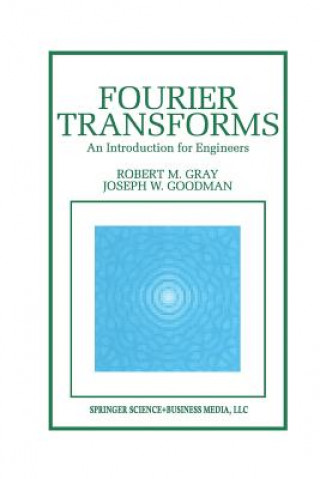
The Fourier transform is one of the most important mathematical tools in a wide variety of fields in science and engineering. In the abstract it can be viewed as the transformation of a signal in one domain (typically time or space) into another domain, the frequency domain. Applications of Fourier transforms, often called Fourier analysis or harmonic analysis, provide useful decompositions of signals into fundamental or "primitive" components, provide shortcuts to the computation of complicated sums and integrals, and often reveal hidden structure in data. Fourier analysis lies at the base of many theories of science and plays a fundamental role in practical engineering design. The origins of Fourier analysis in science can be found in Ptolemy's decomposing celestial orbits into cycles and epicycles and Pythagorus' de composing music into consonances. Its modern history began with the eighteenth century work of Bernoulli, Euler, and Gauss on what later came to be known as Fourier series. J. Fourier in his 1822 Theorie analytique de la Chaleur [16] (still available as a Dover reprint) was the first to claim that arbitrary periodic functions could be expanded in a trigonometric (later called a Fourier) series, a claim that was eventually shown to be incorrect, although not too far from the truth. It is an amusing historical sidelight that this work won a prize from the French Academy, in spite of serious concerns expressed by the judges (Laplace, Lagrange, and Legendre) re garding Fourier's lack of rigor.


Informazioni sul libro
Inglese
Categorie

Regala questo libro oggi stesso
È facile
1 Aggiungi il libro al carrello e scegli la consegna come regalo 2 Ti invieremo subito il buono 3 Il libro arriverà all'indirizzo del destinatarioPotrebbe interessarti anche

 /
/
 In brossura
 17.99
€
17.99
€


 /
Rigido
12.49
€
/
Rigido
12.49
€





 /
In brossura
7.89
€
/
In brossura
7.89
€











Ciao! Sono Libroamiko, il tuo consulente di libri.
Come posso aiutarti?