
 Contatto
 Come acquistare
Consegna
Guida all'acquisto
 Inglese
 40 b
40 b
 Nuovi
Nuovi
Fino a 30 giorni per il reso

It was 1865-the year America was supposed to change.
Slavery was abolished. The Civil War was over. The nation had torn itself apart and was beginning to put itself back together-battered but determined. Liberty and justice for all. That was the promise.
Yet nearly a century later, schools remained segregated, discrimination remained legal, and Black Americans were still fighting for rights the Fourteenth and Fifteenth Amendments were supposed to secure.
Would the nation's response to the Civil Rights Act of 1964 finally be different?
And when we think about the massive course corrections that finally turned the tide-who comes to mind?
Republican President Dwight D. Eisenhower had signed the Civil Rights Acts of 1957 and 1960-the first two federal civil rights laws since Reconstruction. Yet in a twist of history, it was Democratic President Lyndon B. Johnson who later signed the Civil Rights Act of 1964 while completing Democratic President John F. Kennedy's term after Kennedy's assassination.
Then, when Republican President Richard Nixon took office in 1969, he inherited a civil rights struggle that was not yet fully resolved.
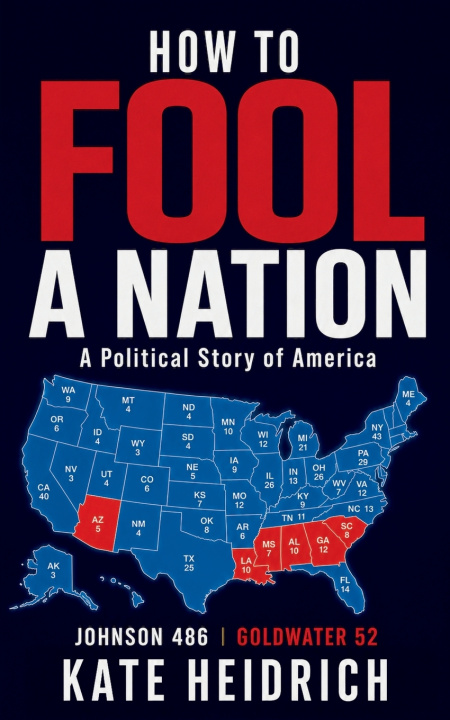
How to Fool a Nation challenges the familiar account of a party "switch" while examining how power, culture, and political identity shape one another.
From the abolition of slavery and the fight for civil rights to the expansion of welfare programs, debates over abortion, immigration, and LGBTQ rights, and the pursuit of economic opportunity, this book examines the moral and political struggles that have shaped America's political identities.
But this is not simply a story of political upheaval-it is a story of morality: how it evolves, how it is shaped, and how it transcends any single ideology or institution.
This book invites readers to look again at America's past to understand its present-and to consider the moral, political, and economic questions that will shape its future.


Informazioni sul libro
Inglese

Regala questo libro oggi stesso
È facile
1 Aggiungi il libro al carrello e scegli la consegna come regalo 2 Ti invieremo subito il buono 3 Il libro arriverà all'indirizzo del destinatarioCiao! Sono Libroamiko, il tuo consulente di libri.
Come posso aiutarti?