
 Contatto
 Come acquistare
Consegna
Guida all'acquisto
 Inglese
 33 b
33 b
 Nuovi
Nuovi
Fino a 30 giorni per il reso

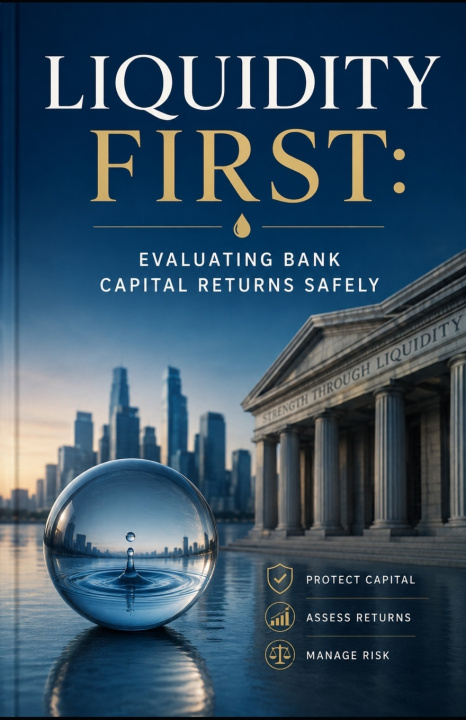
Liquidity First: Evaluating Bank Capital Returns Safely argues that the safety of bank capital returns depends not on profitability alone, but on a bank's ability to maintain sufficient liquidity, capital strength, and resilience under stress. The book explains the critical distinction between liquidity, capital, and solvency, showing how even profitable and well-capitalized banks can fail if they lose access to funding or experience rapid deposit outflows. Through discussions of regulatory frameworks, liquidity risk management, financial metrics, and stress testing, the book establishes a liquidity-first philosophy in which shareholder distributions are evaluated only after an institution demonstrates its ability to withstand adverse conditions.
The book examines the practical tools and decision-making processes used to evaluate dividends and share repurchases responsibly. It explores sustainable payout ratios, the advantages and risks of buybacks, the importance of asset quality, and the lessons learned from historical banking crises. Throughout these topics, a recurring theme emerges: strong earnings and favorable market conditions can create pressure for larger capital returns, but history repeatedly shows that economic conditions can change quickly. Institutions that preserve adequate liquidity, maintain strong capital buffers, conduct rigorous stress testing, and monitor emerging risks are better positioned to continue rewarding shareholders over the long term.
The final chapters focus on governance, risk culture, strategic oversight, and the future of liquidity management. The book presents a comprehensive capital return evaluation framework that integrates liquidity analysis, capital adequacy, earnings sustainability, asset quality, stress testing, and board oversight into a disciplined decision-making process. It concludes that sustainable shareholder value is created not by maximizing distributions during good times, but by preserving the flexibility and resilience necessary to navigate uncertainty. The central message is clear: before deciding how much capital can be returned, banks must first ensure they have the liquidity and financial strength required to survive and succeed through future economic and market disruptions.


Informazioni sul libro
Inglese

Regala questo libro oggi stesso
È facile
1 Aggiungi il libro al carrello e scegli la consegna come regalo 2 Ti invieremo subito il buono 3 Il libro arriverà all'indirizzo del destinatarioCiao! Sono Libroamiko, il tuo consulente di libri.
Come posso aiutarti?