
 Contatto
 Come acquistare

Consegna
Guida all'acquisto
 Inglese
 262 b
Fino a 30 giorni per il reso
I clienti hanno acquistato anche





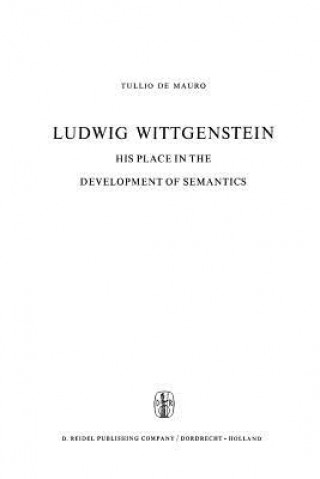
Various students of general linguistics and semantics quote and discuss Wittgenstein, among others, OGDEN and RICHARDS (1960), ULLMANN (1951, 1962), PAGLIARO (1952, 1957), WELLS (1960), REGNELL (1960) and 1 ZIFF (1960). For the most part however they quote the Tractatus and not 2 the Philosophical Investigations ; not all of them consider the most important ideas in the Tractatus but often discuss marginal points; above all they often make the discussion of Wittgenstein's ideas secondary to the development of their own thought. It should be added, moreover, that these students are exceptions. The large majority of language theorists, especially those with a philological background, have almost no know ledge of Wittgenstein's ideas. One scholar thinks that Wittgenstein's linguistic philosophy rests upon a grotesque misunderstanding of the workings of language (HERDAN, 1962, Chapter 24). The present book seeks to draw the attention of students of general linguistics and semantics to the thought of both the early and the later Wittgenstein: not only the Philosophical Investigations but also the Tractatus is concerned with everyday language: Wittgenstein was thinking of the propositions of everyday language, when he affirmed that the proposition is a picture of reality (Chapter 1). This conception is very old, it is in fact found in Aristotle and it dominated ancient, mediaeval and modern rationalistic thought; only Locke, Vico and Leibniz criticized it strongly (Chapter 2).


Informazioni sul libro
Inglese
Categorie

Regala questo libro oggi stesso
È facile
1 Aggiungi il libro al carrello e scegli la consegna come regalo 2 Ti invieremo subito il buono 3 Il libro arriverà all'indirizzo del destinatarioPotrebbe interessarti anche





 /
 In brossura
 13.19
€




Ciao! Sono Libroamiko, il tuo consulente di libri.
Come posso aiutarti?