
 Contatto
 Come acquistare
Consegna
Guida all'acquisto
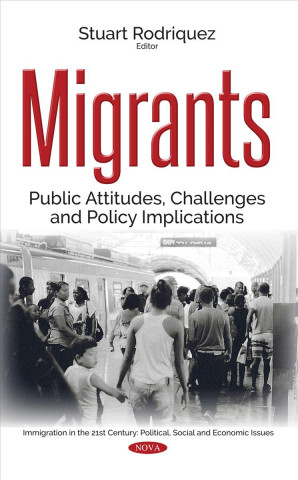
Migrants
 Inglese
 653 b
653 b
30 giorni per il reso
I clienti hanno acquistato anche

 /
/
 In brossura
 27.19
€
27.19
€















Chapter One reviews the interplay between the phenomenon of migration and corresponding response from health care establishments, and analyses the challenges posed by migrant crises and its implications for the future of public healthcare. In Chapter Two, the authors discuss how different socio-economic and cultural disciplines, such as economics, anthropology, geography, political science, and heath, have enriched the notion of transnationalism, which, defined simply, is multiple connections and interactions linking people and institutions across the borders of more than one nation-state. Chapter Three covers how decades of immigration exponentially increased the population of the overseas department of French Guyana and its effects on the nation. Chapter Four presents the results of a social-pedagogical research project regarding the current situation of the education of migrant farm workers in Mexico. Chapter Five considers the long-term influence of migration on the lives of the refugees and the citizens of Germany. Chapter Six explores whether or not the activities of migrant smuggling can be combated and prevented by parties in light of the current wording of these obligations laid down in the Protocol. Chapter Seven argues that the Protocol against the Smuggling of Migrants by Land, Sea and Air, Supplementing the United Nations Convention against Transnational Crime, 15 November 2000 has failed to offer a clear stand-alone and comprehensive framework of rights that protect smuggled migrants. Chapter Eight describes the current refugee and migration human rights situation and anti-migrant sentiment in Western countries. This book also includes an expert commentary that discusses why the migrant network and international migration cannot be schematically separated.


Informazioni sul libro
Inglese

Regala questo libro oggi stesso
È facile
1 Aggiungi il libro al carrello e scegli la consegna come regalo 2 Ti invieremo subito il buono 3 Il libro arriverà all'indirizzo del destinatarioPotrebbe interessarti anche





 /
In brossura
32.99
€
/
In brossura
32.99
€
 /
In brossura
19.69
€
/
In brossura
19.69
€