
 Contatto
 Come acquistare
Consegna
Guida all'acquisto
 Inglese
 30 b
30 b
 In preparazione
 Nuovi
Nuovi
Fino a 30 giorni per il reso

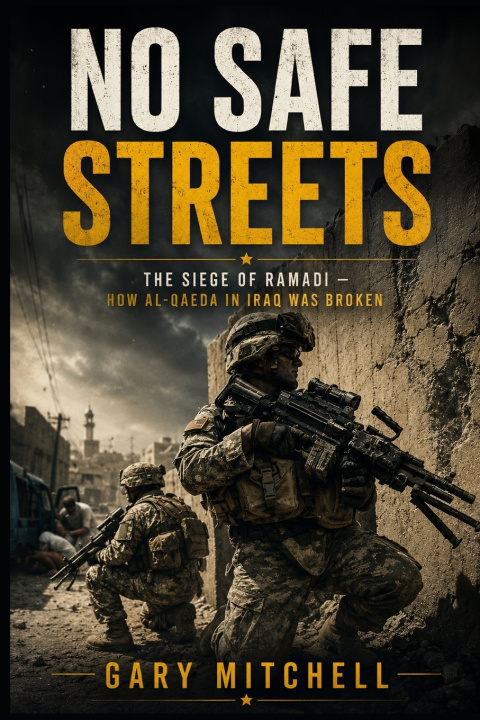
No Safe Streets
The Siege of Ramadi - How Al-Qaeda in Iraq Was Broken
By Gary Mitchell
Ramadi teaches you fast that noise is not information. Engines, shutters, distant thumps-none of it tells you where the danger is. The threat lives inside windows. It waits in doorways that won't stay shut. It watches.
In the middle years of the Iraq War, this dusty river city became a strategic knot-roads, tribal power, provincial authority, and a corridor leading straight to the capital. For insurgents it was a sanctuary and a stage. For the coalition it became an argument that had to be answered, not with a single dramatic assault, but with endurance: outposts built and attacked, police stations defended as symbols of legitimacy, patrol routes turned into mathematical problems, and alliances pursued in a landscape where loyalty could be fatal.
This is not the story of one clean battle. It is the story of a siege-pressure applied over months, measured in intersections and rooftops, in rumours and resupply runs, in the slow work of building security inside a city that functioned as an intelligence system for the enemy. The men on the street think about the next corner and the next roofline. Commanders think about posture, partnerships, and time. Civilians think about whether leaving is safer than staying, and whether returning will ever feel like returning.
No Safe Streets follows Ramadi from its darkest stretches to the hinge moment when brutality, local agency, and hard-earned adaptation converged-when tribes began to turn, networks began to fracture, and the meaning of "no safe streets" started, slowly, to change. It's a narrative of urban war with a clear spine: not victory-lap mythology, but the practical, costly work of breaking an enemy system in a city that would not stop watching.
(Your own manuscript states this core idea plainly: Ramadi isn't "one assault"-it's a city held under pressure until the pressure breaks the enemy's system.


Informazioni sul libro
Inglese

Regala questo libro oggi stesso
È facile
1 Aggiungi il libro al carrello e scegli la consegna come regalo 2 Ti invieremo subito il buono 3 Il libro arriverà all'indirizzo del destinatarioCiao! Sono Libroamiko, il tuo consulente di libri.
Come posso aiutarti?