
 Contatto
 Come acquistare
Consegna
Guida all'acquisto
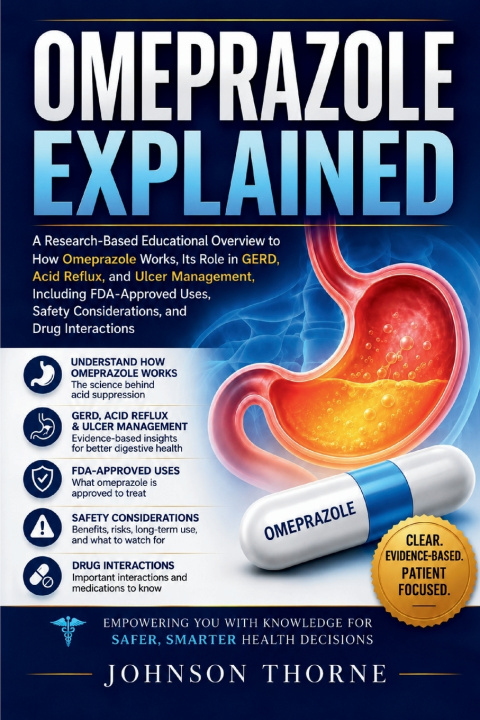
OMEPRAZOLE EXPLAINED
A Research-Based Educational Overview to How Omeprazole Works, Its Role in GERD, Acid Reflux, and Ulcer Management, Including FDA-Approved Uses, Safety Considerations, and Drug Interactions
 Inglese
 54 b
54 b
 In preparazione
 Nuovi
Nuovi
Fino a 30 giorni per il reso

Omeprazole is one of the most widely used medications for managing acid-related conditions such as GERD, acid reflux, and peptic ulcer disease. Yet many people taking it could not clearly explain how it actually reduces stomach acid, why timing around meals can matter, what makes it different from other acid-reducing medications, or which safety considerations genuinely matter with long-term use.
That gap matters.
It is the difference between simply recognizing the name of a medication and genuinely understanding the science behind modern acid-suppression therapy.
Omeprazole Explained was written to close that gap.
This research-based educational guide breaks down the physiology, pharmacology, clinical context, and safety profile of omeprazole in language that is clear, accurate, and genuinely readable. No medical background required. No exaggerated claims. No promotional framing. Just organized, evidence-based information designed to help readers better understand one of the most commonly used medications in modern gastroenterology.
What This Guide Covers- The science of stomach acid explained clearly, including gastric physiology, the proton pump mechanism, digestive enzymes, and the protective defenses that help keep the stomach lining intact
- The clinical context of GERD, acid reflux, and peptic ulcer disease, including how these conditions are understood, evaluated, and described in medical literature
- How omeprazole works at a cellular level, including its mechanism as a prodrug, its selective activation within the acidic environment of the stomach, and why its acid-suppressing effects can last longer than the drug remains in the bloodstream
- The pharmacokinetic and pharmacodynamic characteristics of omeprazole, including absorption, metabolism, genetic variation in drug processing, and elimination pathways
- The FDA-approved uses of omeprazole, from GERD and erosive esophagitis to its role in combination regimens for H. pylori eradication and treatment of certain hypersecretory conditions
- Safety considerations discussed in clinical research, including common side effects, less common reactions, and long-term considerations involving vitamin B12, magnesium, bone health, kidney function, and other areas of ongoing research
- Clinically significant drug interactions, including why certain combinations warrant particular attention and how interaction mechanisms can affect treatment
- How omeprazole compares with other proton pump inhibitors and H2-receptor blockers, including esomeprazole, pantoprazole, lansoprazole, rabeprazole, dexlansoprazole, and famotidine
- How clinical considerations can differ across populations, including children, older adults, pregnancy, and people with liver or kidney conditions
- Readers seeking a clearer understanding of the science behind omeprazole and proton pump inhibitors
- Caregivers supporting individuals managing GERD, acid reflux, or peptic ulcer disease
- Pharmacy, nursing, medical, and healthcare students studying gastrointestinal pharmacology
- Healthcare learners interested in digestive physiology and evidence-based clinical science
- General readers who prefer medically grounded explanations rather than simplified internet summaries
What it offers is understanding, presented clearly, grounded in scientific evidence, and written for readers who want accurate, responsible information about digestive health and modern pharmacology.
Omeprazole is a familiar name to millions of people. But familiarity with a medication is not the same as understanding it.
This book was written to provide that explanation.


Informazioni sul libro
Inglese
