
 Contatto
 Come acquistare
Consegna
Guida all'acquisto
 Inglese
 103 b
103 b
30 giorni per il reso
I clienti hanno acquistato anche






 /
/
 In brossura
 14.19
€
14.19
€
 /
In brossura
16.49
€
/
In brossura
16.49
€

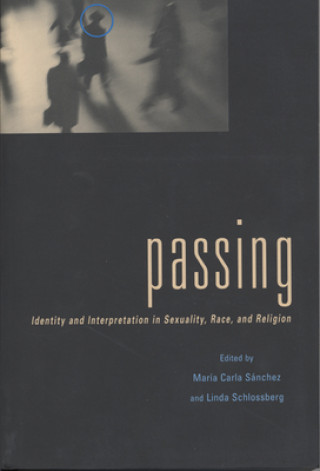
Passing for what you are not- - whether it is mulattos passing as white, Jews passing as Christian, or drag queens passing as women -- can be a method of protection or self-defence. But it can also be a uniquely pleasurable experience, one that trades on the erotics of secrecy and revelation. It is precisely passing's radical playfulness, the way it asks us to reconsider our assumptions and forces our most cherished fantasies of identity to self-destruct, that is centrally addressed in Passing: Identity and Interpretation in Sexuality, Race, and Religion. Identity in Western culture is largely structured around visibility, whether in the service of science (Victorian physiognomy), psychoanalysis (Lacan's mirror stage), or philosophy (the Panopticon). As such, it is charged with anxieties regarding classification and social demarcation. Passing wreaks havoc with accepted systems of social recognition and cultural intelligibility, blurring the carefully-marked lines of race, gender, and class. Bringing together theories of passing across a host of disciplines -- from critical race theory and lesbian and gay studies, to literary theory and religious studies -- Passing complicates our current understanding of the visual and categories of identity. Contributors: Michael Bronski, Karen McCarthy Brown, Bradley Epps, Judith Halberstam, Peter Hitchcock, Daniel Itzkovitz, Patrick O'Malley, Miriam Peskowitz, Maria C. Sanchez Linda Schlossberg, and Sharon Ullman


Informazioni sul libro
Inglese
Categorie

Regala questo libro oggi stesso
È facile
1 Aggiungi il libro al carrello e scegli la consegna come regalo 2 Ti invieremo subito il buono 3 Il libro arriverà all'indirizzo del destinatarioPotrebbe interessarti anche





 /
In brossura
10.69
€
/
In brossura
10.69
€











Ciao! Sono Libroamiko, il tuo consulente di libri.
Come posso aiutarti?