
 Contatto
 Come acquistare
Consegna
Guida all'acquisto
 Inglese
 166 b
166 b
Fino a 30 giorni per il reso
I clienti hanno acquistato anche




 /
/
 In brossura
 10.89
€
10.89
€
 /
Rigido
33.89
€
/
Rigido
33.89
€




 /
Rigido
33.89
€
/
Rigido
33.89
€

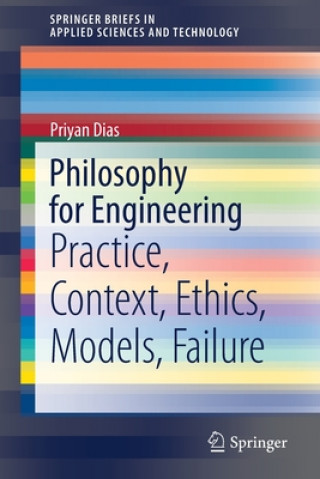
This book highlights the unique need for philosophy among engineers, which stems from issues regarding their knowledge (epistemology), role or being (ontology) and influence (ethics). It discusses practice, context, ethics, models and failure as key aspects of engineering, and provides an easy but essential introduction to philosophy for engineers by presenting four key philosophers and linking them to these aspects: Karl Popper (failure), Thomas Kuhn (models), Michael Polanyi (practice & ethics) and Martin Heidegger (context & ethics). Popper, Kuhn and Polanyi are philosophers of science (epistemologists) who have challenged the view that science is a 'cool, detached' discipline, since it also depends on human imagination (Popper), consensus (Kuhn) and judgment plus artistry (Polanyi); factors that are central to engineering. Heidegger (an ontologist) critiqued technology on the one hand (ethics), but also stressed the importance of 'doing' over 'knowing,' thus 'authenticating' the highly pragmatic engineering profession. Science is the 'core' component of engineering, which is overlaid by a variety of heuristics . Practice-based knowledge can be formalized, with artificial intelligence (AI) offering a valuable tool for engineering, just as mathematics has done for science. The book also examines systems thinking in engineering. Featuring numerous diagrams, tables and examples throughout, the book is easily accessible to engineers.


Informazioni sul libro
Inglese
Categorie

Regala questo libro oggi stesso
È facile
1 Aggiungi il libro al carrello e scegli la consegna come regalo 2 Ti invieremo subito il buono 3 Il libro arriverà all'indirizzo del destinatarioPotrebbe interessarti anche














Ciao! Sono Libroamiko, il tuo consulente di libri.
Come posso aiutarti?