
 Contatto
 Come acquistare
Consegna
Guida all'acquisto
 Inglese
 30 b
30 b
 Nuovi
Nuovi
Fino a 30 giorni per il reso

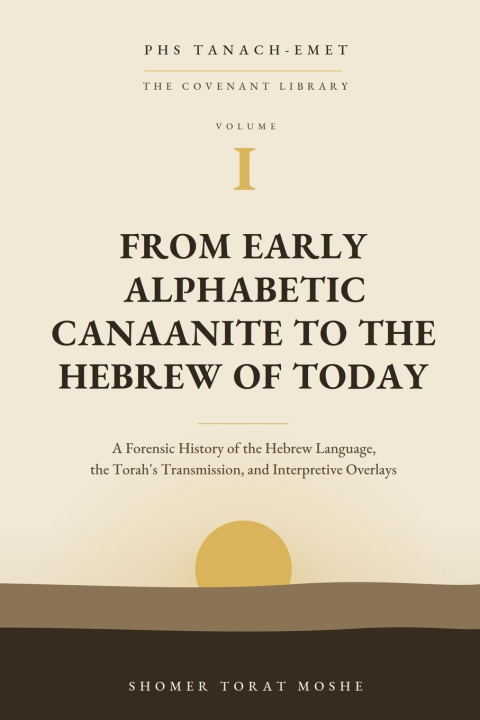
When you read the Torah in English, how much of what you hear is in the Hebrew itself - and how much arrived later, from somewhere else?
Between the Torah's first readers and today's stand three thousand years of change. The alphabet itself was invented and re-invented. The Hebrew script was written in and changed under empires. The text was carried into Greek, then Latin, each translation making choices the Hebrew never made. Rabbinic interpretation hardened into a legal system. Medieval scholars read the text through Arabic and Greek philosophy. Then came printing, modern Hebrew, and four centuries of English Bibles.
Every one of those stages left a deposit. Some of it clarifies. Some of it quietly replaces what the text said.
This volume is a forensic history of how that happened - and a working method for telling the layers apart.
Inside:
Where the alphabet came from, what Proto-Canaanite and Paleo-Hebrew actually were, and why the script Moses would have used is not the script in a modern Torah scroll.
How Assyrian, Babylonian, and Persian rule changed the writing system, and what the rabbis later remembered about that change.
What happened to meaning when the Torah crossed into Greek and Latin - and how legal and philosophical categories from those cultures came back into the reading.
What the Masoretes preserved, what they added, and what the manuscript record can and cannot establish.
A taxonomy of interpretive overlays - translational, orthographic, legal, philosophical, theological - each with a test the reader can apply.
A fully worked example on Genesis 2:18, showing the method from start to finish on a verse most readers think they already understand.
The method is visible throughout. Claims carry an evidence grade, from directly attested down to speculative, printed alongside the claim. An appendix lists the claims this book deliberately refuses to make, and why. Where the evidence runs out, the book says so.
No Hebrew is required. Nothing is asked to be taken on trust.
Volume I of The Covenant Library. It establishes what the language and the manuscripts allow anyone to say - the foundation the other three volumes build on.


Informazioni sul libro
Inglese
