
 Contatto
 Come acquistare
Consegna
Guida all'acquisto
 Inglese
 124 b
124 b
Fino a 30 giorni per il reso
I clienti hanno acquistato anche












 /
/
 In brossura
 31.09
€
31.09
€

 /
In brossura
61.39
€
/
In brossura
61.39
€

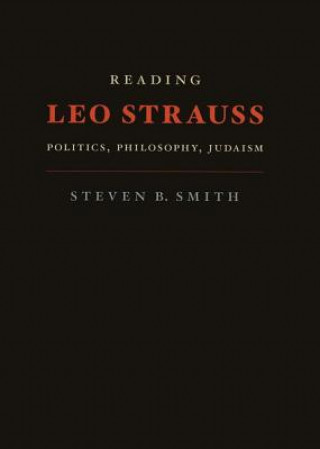
Interest in Leo Strauss is greater now than at any time since his death, mostly because of the purported link between his thought and the political movement known as neoconservatism. Steven B. Smith, though, surprisingly depicts Strauss not as the high priest of neoconservatism but as a friend of liberal democracy - perhaps the best defender democracy has ever had. Moreover, in "Reading Leo Strauss", Smith shows that Strauss's defense of liberal democracy was closely connected to his skepticism of both the extreme Left and the extreme Right. Smith asserts that this philosophical skepticism defined Strauss's thought. It was as a skeptic, Smith argues, that Strauss considered the seemingly irreconcilable conflict between reason and revelation - a conflict Strauss dubbed the "theologico-political problem". Calling this problem "the theme of my investigations," Strauss asked the same fundamental question throughout his life: what is the relation of the political order to revelation in general and Judaism in particular? Smith organizes his book with this question, first addressing Strauss's views on religion and then examining his thought on philosophical and political issues. In his investigation of these philosophical and political issues, Smith assesses Strauss's attempt to direct the teaching of political science away from the examination of mass behavior and interest group politics and toward the study of the philosophical principles on which politics are based. With his provocative, lucid essays, Smith goes a long way toward establishing a distinctive form of Straussian liberalism.


Informazioni sul libro
Inglese

Regala questo libro oggi stesso
È facile
1 Aggiungi il libro al carrello e scegli la consegna come regalo 2 Ti invieremo subito il buono 3 Il libro arriverà all'indirizzo del destinatarioPotrebbe interessarti anche




 /
In brossura
17.89
€
/
In brossura
17.89
€
Ciao! Sono Libroamiko, il tuo consulente di libri.
Come posso aiutarti?