
 Contatto
 Come acquistare
Consegna
Guida all'acquisto
Redefining Female Religious Life
 Inglese
 513 b
513 b
Fino a 30 giorni per il reso
I clienti hanno acquistato anche









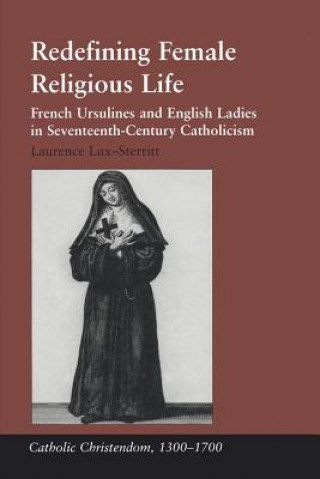
This short study offers a contribution to the flourishing debate on post-Reformation female piety. In an effort to avoid excessive polarization condemning conventual life as restrictive or hailing it as a privileged path towards spiritual perfection, it analyses the reasons which led early-modern women to found new congregations with active vocations. Were these novel communities born out of their founders' rejection of the conventual model? Through the comparative analysis of two congregations which became, in seventeenth-century France and England, the embodiment of women's efforts to become actively involved in the Catholic Reformation, this book offers a nuanced interpretation of female religious life and particularly of the relationship between cloistered tradition and aposotolic vocations. Despite the differences in their national political and religious backgrounds, both the French Ursulines and the Institute of English Ladies shared the same aim to revitalise the links between the Catholic faith and the people, reaching out of the cloister and into the world by educating girls who would later become wives and mothers. This study suggests that these pioneering Catholic women, though in breach of Tridentine decrees, did not turn their backs on contemplative piety: although both the French Ursulines and the English Ladies undertook work which had hitherto been the preserve religious men, they were motivated by their desire to help the Church rather than by a wish to liberate women from what eighteenth-century writers later perceived as the shackles of conventual obedience. It is argued that the founders of new, uncloistered congregations were embracing vocations which they construed as personals sacrifices; they followed the arduous path 'mixed life' in an act of self-abnegation and chose apostolic work as their early-modern reinterpretation of medieval asceticism.


Informazioni sul libro
Inglese
Categorie

Regala questo libro oggi stesso
È facile
1 Aggiungi il libro al carrello e scegli la consegna come regalo 2 Ti invieremo subito il buono 3 Il libro arriverà all'indirizzo del destinatarioPotrebbe interessarti anche


 /
/
 In brossura
 10.99
€
10.99
€
 /
In brossura
19.89
€
/
In brossura
19.89
€





 /
In brossura
8.89
€
/
In brossura
8.89
€
 /
In brossura
10.09
€
/
In brossura
10.09
€

 /
In brossura
23.79
€
/
In brossura
23.79
€








Ciao! Sono Libroamiko, il tuo consulente di libri.
Come posso aiutarti?