
 Contatto
 Come acquistare
Consegna
Guida all'acquisto
Rome
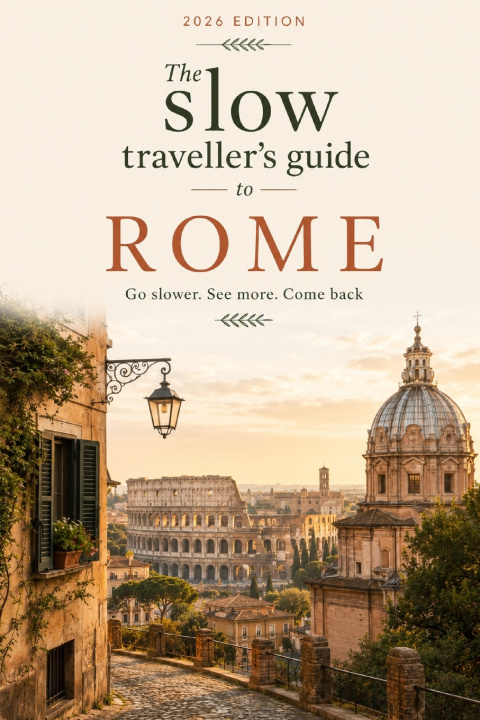
Eat Locally, Walk Deeply, Spend Wisely: A Sustainable Guide to the Eternal City (2026 edition)
 Inglese
 59 b
59 b
 Nuovi
Nuovi
30 giorni per il reso

Rome has thirty million visitors a year. This book is not for most of them.
You already know what a rushed Roman holiday looks like. The queue at the Colosseum before sunrise. The laminated menu near the Pantheon. The afternoon spent in a city that feels somehow less extraordinary than you always imagined. You have seen Rome - or a version of it - and you have the photographs to prove it.
But there is another Rome. It is twenty minutes' walk from the Trevi Fountain, in a neighbourhood where the coffee costs €1.10 and the trattoria has no English menu because no one has thought it necessary. It is the Roman Forum at dawn, when the stones are quiet and the site belongs to you and a handful of people who got there early. It is a conversation with a woman outside a church who tells you that Rome is not as good as the stone says and not as bad as people think.
This is the Rome this book is written for.
What this guide gives you
Five fully written walking routes through the Rome that guidebooks skip - from the Ancient City at dawn to the car-free Appian Way on a Sunday morning.
Six neighbourhood portraits - Testaccio, Pigneto, Ostiense, Prati, Garbatella, and a frank account of why the centro storico is a stage set rather than a neighbourhood - with transport, timing, and where to eat without an English menu in sight.
An honest guide to the Colosseum and the Vatican - not an argument for avoiding them, but a case for visiting them differently: earlier, slower, with better preparation, and with time for the six extraordinary sites that almost nobody visits because the famous ones are right there.
Six day trips by train - Ostia Antica, Tivoli, Viterbo, Orvieto, and Civita di Bagnoregio - with full transport details, what to see, and an honest account of how to visit without contributing to the problems tourism creates in small places.
Three fully itemised budget tiers - from €60 to €400 per day - with daily breakdowns, seasonal pricing, and strategies that only work if you know which neighbourhood to eat in and what time to arrive.
Complete appendices covering 200+ Italian phrases organised by situation, emergency contacts, hospital addresses, and a Quick-Reference Emergency Card designed to be kept on your phone.
For travellers who want more than a checklist
The best meal in Rome costs less than the worst one near the Pantheon. The finest museum is in a decommissioned power station in Ostiense. The most extraordinary view in the city is free, through a keyhole on the Aventine Hill, with almost never a queue. Rome rewards the traveller who arrives slowly, spends locally, and pays attention with an experience the checklist version of the city cannot provide.
If that is the Rome you are looking for, this is the guide you need.

Informazioni sul libro
Inglese
