
 Contatto
 Come acquistare
Consegna
Guida all'acquisto
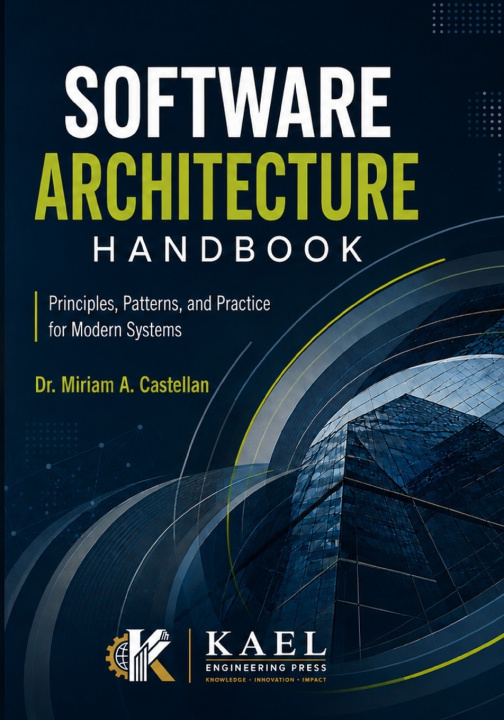
Software Architecture Handbook
Principles, Patterns, and Practice for Modern Systems
 Inglese
 99 b
99 b
 In preparazione
 Nuovi
Nuovi
Fino a 30 giorni per il reso

Most software architecture resources teach individual styles and patterns one at a time, then leave the reader to work out, alone, how those separate ideas are supposed to fit together into one coherent system - and that gap shows up at exactly the moment it matters most, when a structural decision has to be defended to stakeholders rather than just named correctly.
This handbook closes that gap with a single repeatable decision process, applied consistently to one evolving system across eighteen chapters until that system has a complete, internally coherent architecture with every major decision traceable to a specific, stated reason. A second, deliberately contrasting case study is introduced partway through the book, showing that the same honest process applied to different constraints produces a different - equally defensible - conclusion, so the lesson that generalizes is the process, not the specific answers.
Inside, you will find:
- A structured, three-question test for telling an architecturally significant decision apart from an ordinary design decision
- A working method for eliciting, prioritizing, and limiting competing architecture characteristics when stakeholders disagree
- A consistent, side-by-side evaluation of major architectural styles - including layered, event-driven, service-oriented, and microservices architecture - judged fairly on topology, data ownership, operational risk, and an honest when-not-to-use verdict
- Distributed-systems realities any chosen style must survive in production: data consistency trade-offs, scalability and caching strategy, resilience and observability patterns, and layered security thinking
- A structured, three-phase technique for architecture risk analysis, paired with automated fitness functions for ongoing governance
- Guidance on documenting architecture for different audiences and on the organizational structures that interact with architectural decisions
- Incremental strategies for evolving or modernizing an existing system safely, without a risky big-bang rewrite
The back matter includes a glossary and an antipatterns catalog designed for independent day-to-day reference, plus a discussion-questions appendix and a separate rapid-recall interview-questions appendix.
This book is written for practicing software engineers moving into an architect role, working architects who want a structured reference rather than a scattered set of blog posts, and engineers preparing for an architecture-focused technical interview. It assumes you already write code professionally and does not teach programming.
If you have ever known the name of a pattern without being fully able to defend why it belongs in your specific system, this handbook gives you the process, not just the vocabulary. Add it to your library and begin working through a decision framework built to hold up under real constraints.


Informazioni sul libro
Inglese
