
 Contatto
 Come acquistare

Consegna
Guida all'acquisto
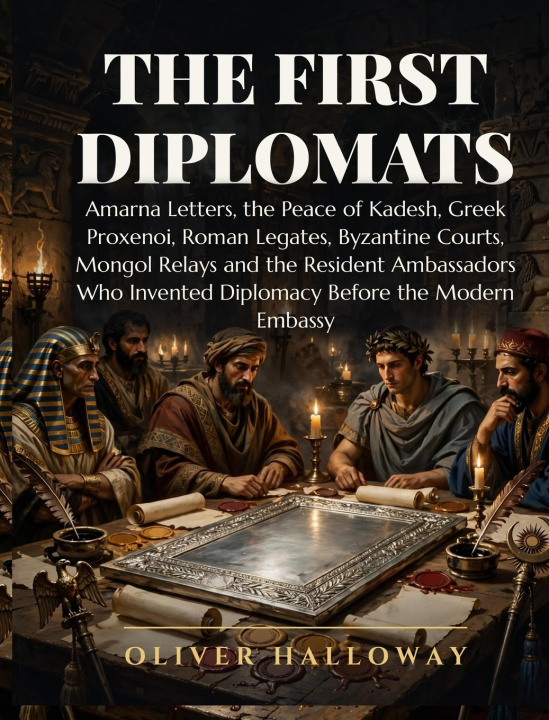
The First Diplomats
Amarna Letters, the Peace of Kadesh, Greek Proxenoi, Roman Legates, Byzantine Courts, Mongol Relays and the Resident Ambassadors Who Invented Diplomacy Before the Modern Embassy
 Inglese
 112 b
 Nuovi
Fino a 30 giorni per il reso

Before there were embassies, there were envoys - and they had to invent diplomacy from nothing.
More than three thousand years before the foreign ministry, kings who would never meet were already conducting a running argument in writing. Babylonian rulers complained that Egyptian gold weighed light in the kiln. Greek cities sent old men to argue their case before foreign crowds. A Byzantine emperor staged mechanical lions and a rising throne so visitors would feel small before a word was spoken. Mongol riders changed horses at relay stations strung across a continent, carrying demands that whole kingdoms answered at their peril.
The First Diplomats tells that invention story in forty chapters - one embassy, treaty, envoy, court or practice at a time - from the clay letters of Amarna to the resident ambassadors of Renaissance Italy.
Inside you'll discover
The Amarna letters and the Bronze Age club of "brother" kings
The Peace of Kadesh - the early peace treaty preserved in both sides' versions, now honoured at the United Nations
Heralds under a sacred truce, and the proxenos - a citizen who represented a foreign city in his own
Rome's fetiales, who declared war by rite, and the legates who argued before kings
Zhang Qian opening the West, heqin brides for peace on the steppe, and the tribute system of East Asia
Byzantium's Bureau of Barbarians, its Book of Ceremonies, and Liudprand's disastrous embassy of 968
Aman safe-conduct, an elephant sent from Baghdad to Charlemagne, dragomans, hostages and ransoms
The Mongol yam relay, Venetian reporting, and the ambassadors who finally stayed put
Who this book is for
For history readers who want institutions made human, for anyone curious about where embassies, immunity, treaties and resident ambassadors actually came from, and for readers of international relations who suspect - correctly - that the story does not begin in 1648.
Oliver Halloway writes narrative institutional history for the curious general reader, grounding every chapter in what survives - letters, tablets, safe-conducts, ceremonies and ambassadors' own reports - and saying plainly where the evidence runs thin.
Read it in order for the full invention story, or open any chapter alone. Every envoy in it faced the same question you will find on every page: what made a stranger's promise believable?


Informazioni sul libro
Inglese
Categorie

Regala questo libro oggi stesso
È facile
1 Aggiungi il libro al carrello e scegli la consegna come regalo 2 Ti invieremo subito il buono 3 Il libro arriverà all'indirizzo del destinatarioCiao! Sono Libroamiko, il tuo consulente di libri.
Come posso aiutarti?