
 Contatto
 Come acquistare
Consegna
Guida all'acquisto
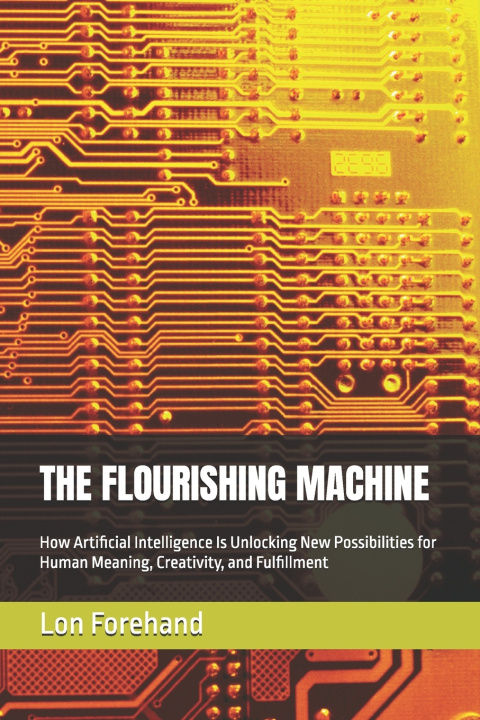
THE FLOURISHING MACHINE
How Artificial Intelligence Is Unlocking New Possibilities for Human Meaning, Creativity, and Fulfillment
 Inglese
 42 b
42 b
 Nuovi
Nuovi
Fino a 30 giorni per il reso

For most of human history, the ceiling on a human life was set by economics. AI is removing that ceiling.
The question humans have always asked - what could I become if survival were not the primary constraint? - is about to get an answer at scale. AI is automating the conditions that have kept billions of people below the threshold where meaning, creativity, and fulfillment become possible. The late diagnosis, the education that never arrived, the drug that existed but cost too much - these are tragedies of access that AI has the capacity to solve.
The Flourishing Machine is the account of that capacity-and the argument that capacity alone is not enough. Flourishing requires choices and institutions that distribute the gains rather than concentrate them.
Written by Lon Forehand - AI policy analyst, 24-year Congressional affairs veteran, and NASA policy expert - this is the most personal book in the series. It is about what the transformation is ultimately for: not productivity or GDP, but the expansion of what a human life can be
What this book reveals:
The diagnostic revolution is already saving lives-and the lives it is not yet saving reveal the access gap more clearly than any policy document. AI detects cancers earlier, predicts cardiac events, and flags drug interactions no clinician could track manually. But these tools are not evenly distributed-the communities that most need early detection are often last to receive it.
The approval bottleneck is the most solvable problem standing between existing medical knowledge and the people who need it The frameworks governing drug and device approval were designed for slow evidence accumulation. AI generates evidence at a pace they were never built to process-reforming them is overdue, not radical
The education system is failing its transformation moment. The credential factory model was designed to produce workers for an economy being rebuilt from scratch. Students entering school today will work in jobs that have not been named yet-and the institutions meant to prepare them are not honest about it.
Technology in the classroom is not a solution-it is a question. The evidence on what helps children learn versus what merely occupies them is more nuanced than the ed-tech industry acknowledges. Getting this right matters because the children who receive the wrong answer carry it for a lifetime.
Eight arguments for why flourishing is a choice, not an outcome
• The AI inflection point is a civilizational opportunity-and opportunities can be missed
• What people most want AI to solve is not what most AI is being built to solve
• The diagnostic revolution exists-the access gap is what stands between it and most people
• The approval institutions gatekeeping human health were built for a slower world
• The education system is failing the transformation moment in real time
• Technology in classrooms helps or harms depending entirely on implementation
• Worker displacement without dignity is a policy failure, not an inevitability
• The possibility horizon is real-but only if we choose it deliberately
Who this book is for:
Parents who want to understand what AI means for their children's futures. Clinicians navigating diagnostic tools their training never covered. Educators caught between institutional inertia and student need. Policy makers with the power to reform systems that are failing. And anyone who believes the purpose of this moment is not efficiency-but the expansion of what a human life can be
The Flourishing Machine is the seventh book in the AGI Coming Soon series.
About the author: Lon Forehand spent 24 years at the intersection of technology policy and Congressional affairs, including budget and policy work for NASA and major aerospace contractors, and publishes AGI Coming Soon at agicomingsoo


Informazioni sul libro
Inglese

Regala questo libro oggi stesso
È facile
1 Aggiungi il libro al carrello e scegli la consegna come regalo 2 Ti invieremo subito il buono 3 Il libro arriverà all'indirizzo del destinatarioCiao! Sono Libroamiko, il tuo consulente di libri.
Come posso aiutarti?