
 Contatto
 Come acquistare
Consegna
Guida all'acquisto
 Inglese
 32 b
32 b
 Nuovi
Nuovi
Fino a 30 giorni per il reso

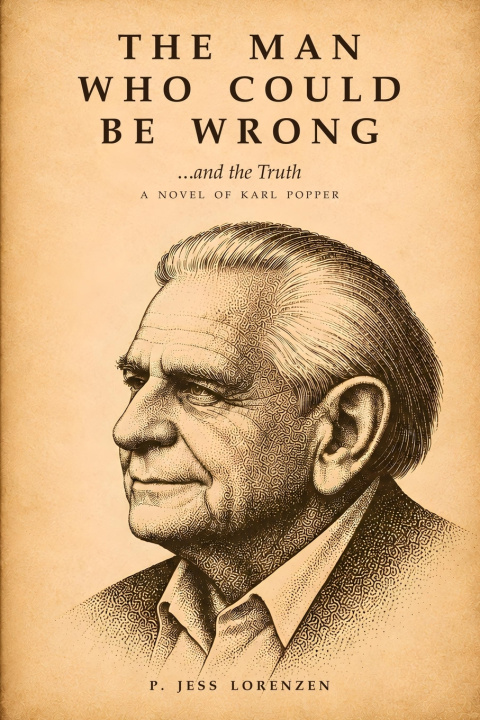
He gave the free world its best defense. Then he had to use it on himself.
Vienna, June 1919. A sixteen-year-old boy marches with the crowd that has an answer for everything. By afternoon, boys his age are lying dead on the street-and the men with the answers are already explaining why it had to happen. He walks home with one question that will never let him go: How would I know if I were wrong?
That question will take him to a packed concert hall where Einstein tells a starving city that a single measurement could destroy his life's work. To a burning courthouse and eighty-nine dead. To a staircase where his gentle teacher is shot. To the far end of the earth, where an exile writes the book that gives the twentieth century a name for what it is fighting for: the open society. To a Cambridge room where Wittgenstein picks up a poker. And to Berkeley, 1965, where his most brilliant student stands at a window above the Free Speech Movement and finds the two words that will make him famous and end their friendship: anything goes.
But the question was never only for other people. In the silence of a widower's house, the man who taught the world to doubt finally turns it on himself-and on the one person who paid for his certainties.
A novel about Karl Popper-the philosopher who gave us the paradox of tolerance and the science of being proven wrong-written for an age in which the debate is always over, doubt is treason, and everyone already knows.
It is about certainty, and what it costs. And about the one voice a free society cannot afford to lose: the one that keeps asking.
For readers of Benjamín Labatut's When We Cease to Understand the World and Daniel Kehlmann's Measuring the World.


Informazioni sul libro
Inglese

Regala questo libro oggi stesso
È facile
1 Aggiungi il libro al carrello e scegli la consegna come regalo 2 Ti invieremo subito il buono 3 Il libro arriverà all'indirizzo del destinatarioCiao! Sono Libroamiko, il tuo consulente di libri.
Come posso aiutarti?