
 Contatto
 Come acquistare
Consegna
Guida all'acquisto
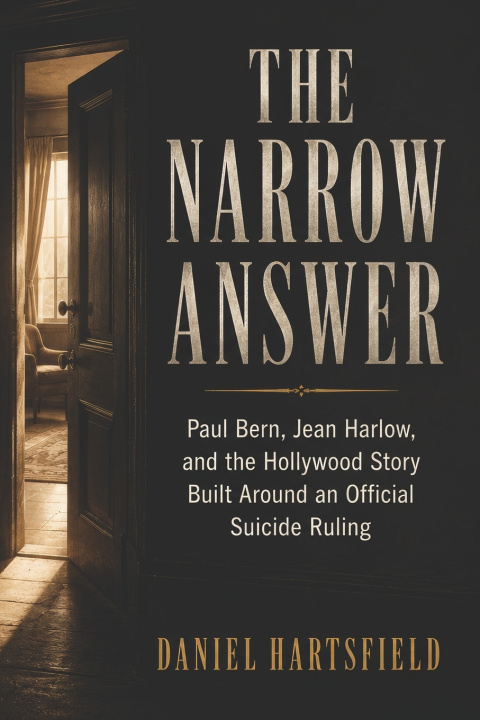
The Narrow Answer
Paul Bern, Jean Harlow, and the Hollywood Story Built Around an Official Suicide Ruling
 Inglese
 34 b
34 b
 Nuovi
Nuovi
Fino a 30 giorni per il reso

An official suicide ruling. An incomplete record. A Hollywood story that never stopped changing.
In September 1932, MGM producer, writer, and director Paul Bern was found dead inside the Benedict Canyon home he shared with Jean Harlow. A revolver, a cryptic note, and an official inquest produced a clear legal classification: suicide. Yet the explanation built around that ruling soon expanded into sexual rumor, a hidden relationship, a second death, studio influence, and allegations of murder and cover-up that were never established in court.
The Narrow Answer is an evidence-aware work of historical true crime and Old Hollywood narrative nonfiction. It reconstructs Bern's life before the scandal, his place within Irving Thalberg's MGM circle, his brief marriage to Harlow, and the professional identity that public memory often reduced to a single tragic room.
The investigation then follows the Easton Drive scene in sequence: the discovery of Bern's body, conflicting reports about the revolver's position, the uncertain handling and meaning of the note, the interval before police control, the medical story presented as motive, and the missing records that limit later reconstruction. Questions are treated as questions. Gaps in documentation are not converted into proof of interference, homicide, or conspiracy.
Dorothy Millette's long and consequential connection to Bern receives the same restraint. Her use of his name, his reported financial support, her journey aboard the Delta King, and her death shortly after his are examined without turning timing into guilt. The book distinguishes what the record supports from later theories that named Millette, Harlow, MGM executives, and others without a criminal charge or adjudicated finding.
The book also examines how Hollywood publicity and newspaper storytelling shaped the case's afterlife. Studio image management, institutional pressure, sexualized reporting, and public suspicion may explain why certain narratives endured, but they are not treated as evidence manipulation without proof. The official suicide ruling remains the strongest legal conclusion, while motive, scene preservation, and the full meaning of Bern's private relationships remain incomplete.
Written in a restrained investigative style, this account separates confirmed fact, official conclusion, attributed reporting, allegation, interpretation, and speculation. A detailed timeline, key-people glossary, and source index help readers follow the chronology and evaluate where the surviving record is firm, fractured, or silent.
For readers drawn to historical true crime, Old Hollywood scandals, film-studio history, celebrity death investigations, and unresolved questions surrounding official narratives, The Narrow Answer offers a disciplined account of what can be known-and where responsible history must stop.


Informazioni sul libro
Inglese

Regala questo libro oggi stesso
È facile
1 Aggiungi il libro al carrello e scegli la consegna come regalo 2 Ti invieremo subito il buono 3 Il libro arriverà all'indirizzo del destinatarioCiao! Sono Libroamiko, il tuo consulente di libri.
Come posso aiutarti?