
 Contatto
 Come acquistare
Consegna
Guida all'acquisto
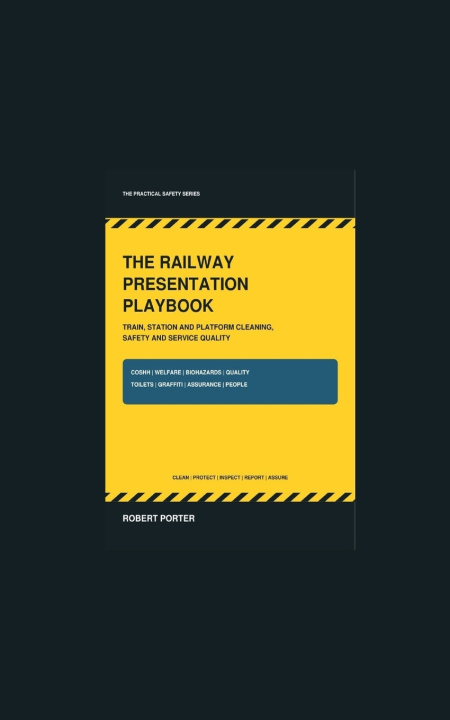
The Railway Presentation Playbook
Train, Station and Platform Cleaning, Safety and Service Quality
 Inglese
 44 b
44 b
 In preparazione
 Nuovi
Nuovi
Fino a 30 giorni per il reso

Railway presentation is not "just cleaning". It is operational care made visible.
The Railway Presentation Playbook: Train, Station and Platform Cleaning, Safety and Service Quality is a comprehensive practical reference for the people responsible for presenting trains, stations and platforms safely, consistently and professionally.
Written by Robert Porter, the book approaches presentation as part of the railway operating system - where passenger expectations, operational pressure, employee welfare, chemical safety, asset condition and service-quality standards meet.
A clean railway environment supports safe movement, usable facilities, passenger dignity, defect identification, asset protection and customer confidence. The book therefore goes considerably beyond appearance, asking not only whether an area is clean, but whether the work was completed safely, whether the result will remain safe and what the condition revealed about the railway environment.
The guide covers train, station and platform presentation; roles and responsibilities; safe access and welfare; COSHH; product control; PPE; ventilation; chemical dosing; spills; routine train cleaning; toilets; CET and tanking interfaces; biological contamination; sharps; graffiti; chewing gum; specialist cleaning; stations and platforms; quality assurance; leadership; handovers; defect management and emergency response.
COSHH is treated as an operational control system rather than paperwork. The guide examines hazardous products, dust, vapours, aerosols and biological agents while emphasising authorised products, correct dosing, ventilation, equipment, PPE and the need to stop when products or conditions are uncontrolled.
Particular attention is given to the people performing the work. Welfare, fatigue, washing facilities, PPE condition, lone working, traumatic exposure, support and competent supervision are treated as genuine safety controls rather than secondary considerations.
The book also addresses practical presentation challenges including toilets, blocked or flooded facilities, blood and bodily fluids, sharps, offensive graffiti, waiting rooms, platforms, bins, public areas and train interiors. It distinguishes routine presentation from specialist tasks that require additional competence, authorisation or equipment.
For managers and supervisors, the book examines resources, competence, stakeholder relationships, quality assurance, investigations and sustainable performance. A presentation manager's role is described as far broader than achieving a final cleanliness score.
Each major principle is supported by an Operational Check, helping users consider the purpose of the task, hazards, people exposed, required controls, equipment and PPE, safe access, expected quality, escalation and handback.
A practical toolkit provides quick-reference control cards for pre-start checks, COSHH pause points, toilet release, sharps, shift handover, quality defects, workforce welfare and emergency reporting.
Designed for train presentation operatives, station presentation staff, mobile teams, supervisors, managers, contractors, facilities professionals and railway operational leaders.
Clean. Protect. Inspect. Report. Assure.


Informazioni sul libro
Inglese
Categorie
