
 Contatto
 Come acquistare
Consegna
Guida all'acquisto
 Inglese
 37 b
37 b
 In preparazione
 Nuovi
Nuovi
Fino a 30 giorni per il reso

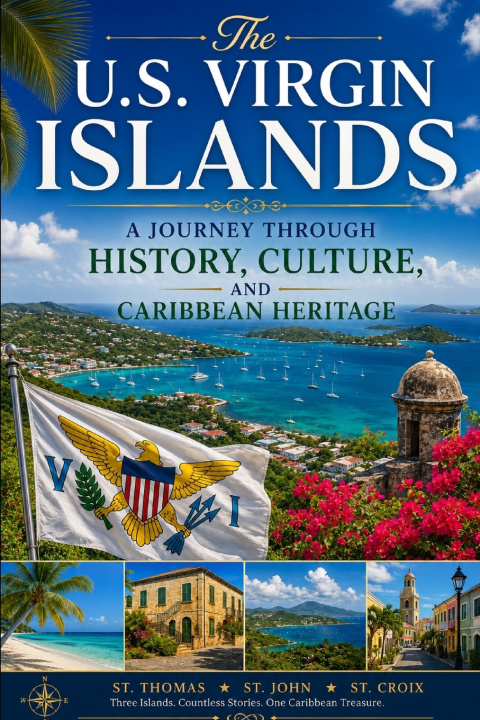
Where Caribbean Heritage Meets American History
The U.S. Virgin Islands are among the most fascinating and culturally diverse places connected to the United States. Located in the eastern Caribbean, the territory is centered on the three main islands of St. Croix, St. Thomas, and St. John, along with numerous smaller islands and cays. Although the islands are part of the United States, their identity has been shaped by thousands of years of Caribbean history and by the meeting of Indigenous, African, European, and American cultures.
Long before European ships arrived, the islands were inhabited by Indigenous peoples who traveled through the Caribbean and developed communities connected to the sea and the natural environment. Archaeological evidence shows that humans have lived in the Virgin Islands for thousands of years, while later Taíno and other Indigenous cultures left an important mark on the region's history. Their story remains visible in archaeological sites, artifacts, and ancient petroglyphs.
The arrival of Europeans transformed the islands forever. European powers competed for influence in the Caribbean, and the Virgin Islands eventually became an important part of the Danish colonial world. For generations, sugar plantations shaped the economy, while thousands of enslaved Africans were forcibly brought to the islands. Their labor created great wealth for the colonial system, but their suffering, resistance, traditions, and determination also became central to the story of the Virgin Islands. The abolition of slavery in the Danish territories in 1848 marked a major turning point, though the social and economic consequences of slavery continued long afterward.
In 1917, the United States purchased the former Danish West Indies from Denmark for $25 million. A decade later, Virgin Islanders received U.S. citizenship. Yet becoming an American territory did not erase the islands' Caribbean identity. Instead, the modern U.S. Virgin Islands developed as a place where American political connections exist alongside powerful local traditions, African-Caribbean heritage, Creole customs, Danish architectural influences, and cultural ties with neighboring Caribbean societies.
Today, the U.S. Virgin Islands are known around the world for their tropical landscapes, beaches, coral reefs, historic towns, old forts, plantation ruins, music, festivals, and warm island traditions. But there is much more to their story than beautiful scenery. The islands possess a rich and sometimes difficult history-a history of Indigenous settlement, colonial competition, slavery, resistance, emancipation, migration, and cultural survival. Official tourism and historical sources continue to highlight this layered heritage through sites ranging from Taíno petroglyphs and plantation ruins to Danish architecture and historic forts.
This book explores that remarkable journey. It examines how the islands developed from their earliest settlements to their present-day position as a U.S. territory with a distinct Caribbean identity. Along the way, we will discover the stories of the people who shaped St. Croix, St. Thomas, and St. John; explore the legacy of Danish rule; understand the central importance of African heritage; and celebrate the music, food, language, festivals, faith, and traditions that continue to define Virgin Islands culture.


Informazioni sul libro
Inglese
Categorie

Regala questo libro oggi stesso
È facile
1 Aggiungi il libro al carrello e scegli la consegna come regalo 2 Ti invieremo subito il buono 3 Il libro arriverà all'indirizzo del destinatarioCiao! Sono Libroamiko, il tuo consulente di libri.
Come posso aiutarti?