
 Contatto
 Come acquistare
Consegna
Guida all'acquisto
 Inglese
 50 b
50 b
 Nuovi
Nuovi
Fino a 30 giorni per il reso

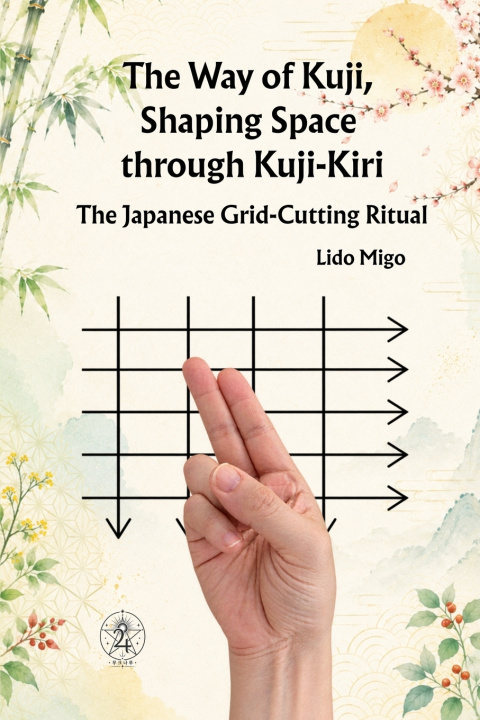
Kuji-kiri is the Japanese ritual of protection in which the practitioner, with the index and middle fingers extended as a sword, cuts a lattice of nine strokes in the air while intoning nine syllables - and by that act draws a boundary: a ward around a room, a doorway, a journey, or oneself. Made famous by the ninja of film and comics, it is in fact seventeen centuries old, with roots in Daoist China and its mature form in the esoteric Buddhism and Shugendo of Japan. This book is the first full-length study and manual of the practice in English.
The Way of Kuji, Volume II is written in two registers and keeps them apart. As history, it follows the nine syllables - Rin, Pyo, To, Sha, Kai, Jin, Retsu, Zai, Zen - from a fourth-century Daoist mountain manual, the Baopuzi, through the grid-drawing rites of Chinese almanacs, the ritual assembly of the nine-character protection rite in Japan, the sword of Fudo Myoo, and the battlefield devotions of the samurai, down to two objects that survive today: wooden spell-tablets excavated from a medieval village stream, and the lattice that the women divers of Mie still stitch onto their headscarves before entering the sea. The ninja legend is tested against the Bansenshukai itself. Throughout, the book distinguishes what the documents establish, what tradition transmits, and what modern imagination has added.
As a manual, it teaches the practice in words, photographs, and diagrams: forming the sword seal and the sheathed position in their standard and variant forms; the formal nine-stroke kuji-kiri, one breath to one stroke, with a complete stroke-order diagram; the haya-kuji, the swift nine for urgent moments; raising a ward upon a space and, without fail, releasing it; making talismans modeled on the excavated tablets and the divers' doman; and a thirty-six-day training program with questions and answers. Appendices provide a one-page summary table, a comparison of stroke orders and deity assignments across lineages, the annotated Baopuzi passage, photographs of all nine hand seals with their Japanese mantras, a glossary, and a full bibliography.
The book asks for no belief. It sets the language of tradition and the language of the present side by side and adjudicates neither, offering the reader a short, clear, repeatable procedure - and the discernment to tell, when next confronted with a claim about ninja, yamabushi, or ancient Daoist masters, which stratum of history it stands on.
For readers of Japanese religion and folklore, students of ninjutsu and the martial arts, practitioners of meditation and ritual, and libraries building collections in East Asian religion and esoteric practice.
Volume II of the series The Way of Kuji. Volume I, Opening Consciousness, teaches the nine hand seals (kuji-in). This volume stands on its own; the seals it requires are summarized in an appendix.


Informazioni sul libro

Regala questo libro oggi stesso
È facile
1 Aggiungi il libro al carrello e scegli la consegna come regalo 2 Ti invieremo subito il buono 3 Il libro arriverà all'indirizzo del destinatarioCiao! Sono Libroamiko, il tuo consulente di libri.
Come posso aiutarti?