
 Contatto
 Come acquistare
Consegna
Guida all'acquisto
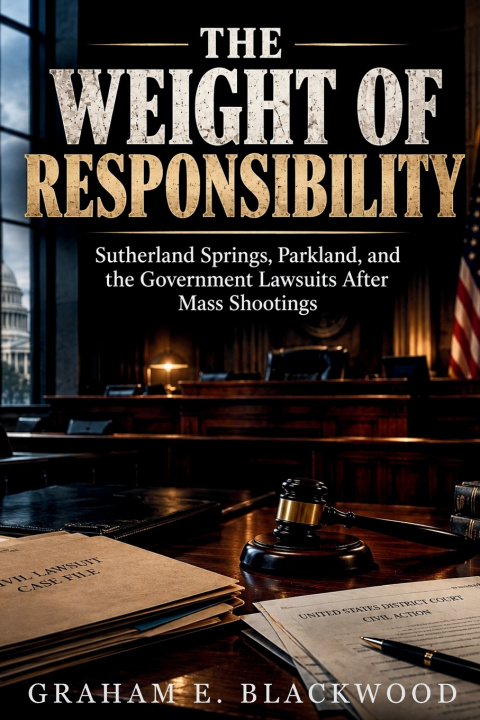
The Weight of Responsibility
Sutherland Springs, Parkland, and the Government Lawsuits After Mass Shootings
 Inglese
 50 b
50 b
 In preparazione
 Nuovi
Nuovi
Fino a 30 giorni per il reso

When a tragedy might have been prevented, who should answer for what happened?
In November 2017, a gunman entered First Baptist Church in Sutherland Springs, Texas, killing 26 people and injuring many others. Three months later, another mass shooting at Marjory Stoneman Douglas High School in Parkland, Florida, left 17 people dead and 17 injured.
But the stories did not end when the gunfire stopped.
For the families and survivors, a different battle was beginning-one that would unfold not on a crime scene, but in federal court.
In both cases, lawsuits raised a difficult question: Can the government be held legally responsible when institutional failures allegedly contribute to a tragedy committed by someone else?
In Sutherland Springs, questions surrounding the handling and transmission of criminal-history information led to a landmark civil case against the United States. The federal court ultimately found the government liable and determined that the United States was 60 percent responsible before the case later ended in a $144.5 million settlement.
In Parkland, families and survivors brought dozens of civil claims after the FBI received a warning about the future shooter but failed to properly act on the information. Forty cases were ultimately resolved through a $127.5 million settlement, without an admission of fault by the United States.
The legal outcomes were different. The questions were enormous.
The Weight of Responsibility takes readers inside the cases that followed these two American tragedies, examining the lawsuits, the evidence, the government's defense, the role of federal agencies, the arguments over negligence and causation, the courtroom battle in Sutherland Springs, and the settlement that brought the Parkland litigation to a close.
But this is more than a story about dollar amounts and legal filings.
It is about what happens when the responsibility for a tragedy becomes a question of law.
Who is responsible when a system fails?
How should courts distinguish between an unforeseeable criminal act and an institutional failure that might have been prevented?
And can any financial award truly account for what families and survivors lost?
With a careful examination of the legal record and the human consequences behind it, The Weight of Responsibility explores two landmark cases that forced the government, the courts, and the public to confront an uncomfortable question:
When tragedy might have been prevented, how far should responsibility extend beyond the person who committed the crime?
For readers interested in true crime, civil litigation, government accountability, and the difficult questions that emerge when institutional failures collide with devastating acts of violence, this book offers a detailed look at what happened after the headlines faded-and the legal battles began.


Informazioni sul libro
Inglese

Regala questo libro oggi stesso
È facile
1 Aggiungi il libro al carrello e scegli la consegna come regalo 2 Ti invieremo subito il buono 3 Il libro arriverà all'indirizzo del destinatarioCiao! Sono Libroamiko, il tuo consulente di libri.
Come posso aiutarti?