
 Contatto
 Come acquistare
Consegna
Guida all'acquisto
 Inglese
 61 b
61 b
 Nuovi
Nuovi
Fino a 30 giorni per il reso

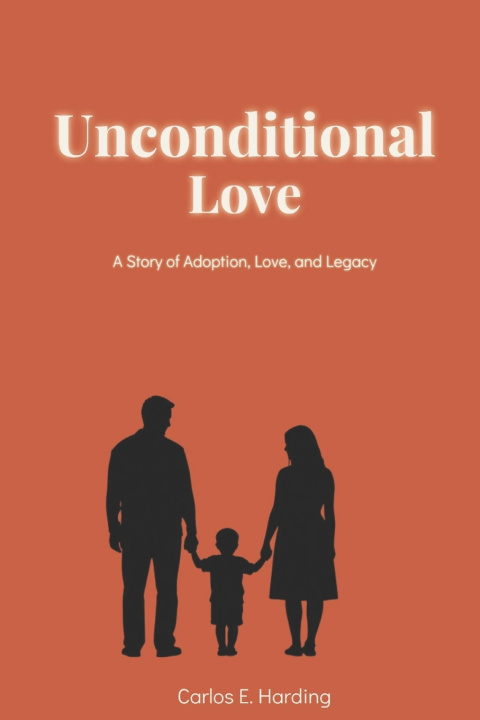
"Unconditional Love: An Adoption Story - Love, Loss, and Legacy" is Carlos E. Harding's memoir of a life shaped by the rarest kind of love: the kind that asks nothing in return. It is at once a personal history, a tribute to the parents who chose him, a chronicle of the search for his biological origins, and a guide for everyone touched by adoption.
Carlos was born on November 15, 1974, in León, Nicaragua, a colonial city trembling on the edge of revolution. The story opens with Dr. Benjamin Lanzas, the physician with "a soul of gold" who attended his birth and treated his birth mother with quiet dignity at the most vulnerable moment of her life - the first link in a chain of unconditional love that would follow Carlos forever. That chain continued with his adoptive parents: Carlos Arturo Harding Lacayo, an engineer of profound generosity and integrity, and his mother, a woman of Mexican birth and Jewish heritage who loved her four children "not equally in the sense of fairness, but equally in the sense of abundance." It included Victoria Flores - "Tata" - the nanny who had cared for his mother decades earlier and became his second mother, and a childhood on the family farm, where even the cows had names and work taught lessons no school could.
But the memoir refuses sentimentality. Carlos writes plainly that not everyone is built to love an adopted child as their own - and that this is no judgment, simply truth. He confronts the wounds inflicted by extended family members who treat "adopted" as a permanent asterisk, the doubt that never fully goes away even in a home that gave no reason for it, and the ghost in the room: the adopted child's quiet, lifelong fear of being left, which surfaced fiercely when his mother faced cancer. He recounts his own missteps too, including a 105-day first marriage that became a crash course in self-discovery before he found the love that would anchor his life.
The book's turning point arrives in a small wrapped box: a DNA testing kit, a birthday gift from his wife after three mini-strokes and a heart attack made his genetic history a medical necessity, not just a mystery. What follows is a years-long search through silence and rejection, dead ends and unexpected kindness - a friend's pivotal phone call, the revelation of a biological father who had once been Nicaragua's Secretary of the Interior, and a first video call with a half-sister that blossomed into daily conversations and a genuine new family. Carlos is honest about both sides of discovery: doors that opened with love and doors that stayed firmly shut.
Woven through it all is loss. The death of his father on September 20, 2024 - "the saddest day in my life" - anchors the memoir's deepest meditation: that unconditional love does not end with death, but continues in every choice, every act of kindness, every relationship its recipient builds.
The final chapters transform memoir into legacy. Carlos writes a letter to adoptive parents on the sacred responsibility of telling children the truth about their stories; a comprehensive guide to adoption trauma and the invisible wounds love alone cannot instantly heal; and a direct, warm letter to adopted kids and teens, assuring them their feelings are normal and their stories began with a brave act of love.
In the end, the book comes full circle - from a delivery room in León to a sunset in Miami, where Carlos, now a father himself, understands that identity is a tapestry woven from many sources, but character comes from the daily choice to love without conditions. His conclusion is simple and earned: in a fractured world, loving unconditionally remains our greatest human achievement.


Informazioni sul libro
Inglese

Regala questo libro oggi stesso
È facile
1 Aggiungi il libro al carrello e scegli la consegna come regalo 2 Ti invieremo subito il buono 3 Il libro arriverà all'indirizzo del destinatarioCiao! Sono Libroamiko, il tuo consulente di libri.
Come posso aiutarti?