
 Contatto
 Come acquistare
Consegna
Guida all'acquisto
 Inglese
 259 b
259 b
Fino a 30 giorni per il reso
I clienti hanno acquistato anche















 /
/
 In brossura
 83.79
€
83.79
€


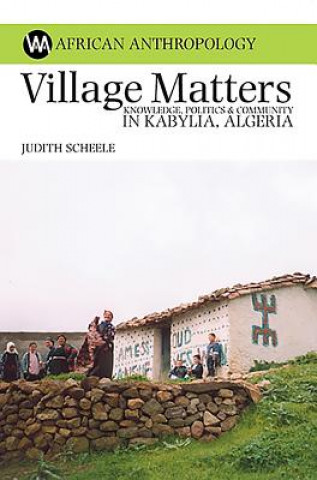
Kabylia is a Berber-speaking, densely populated mountainous region east of Algiers, that has played an important part in Algerian pre- and post-independence politics, and continues to be troublesome to central government. But 'Kabylia' is also an ideal, shaped and shared by a variety of intellectual trends both in Algeria and in France. Kabylia was seen by sociologically minded nineteenth-century French authors as a model of primitive democracy and became central to their debates about good government, the nature of 'race', nationhood, and the social bond. These qualities have by now largely been appropriated by Kabyles themselves, and have become central to Kabyle self-images discussed on numerous websites run by Kabyle emigrants in France as much as by local parties and associations in Kabylia itself. Central to this image is the Kabyles' attachment to their home villages. But what exactly makes a village a village? And how can this emphasis on communal autonomy be articulated within a modern nation-state? These are the questions this book tries to answer through an in-depth case study of one particular village, analysing the contemporary debates that animate it, and tracing its history through the French conquest and occupation, the Algerian war of independence, and the political turmoil, including the challenge of Islamist politics, that followed independence. The 'village', as much as Kabylia as a whole, emerges as a place made by its internal contradictions, and that can only be understood with reference to the position it occupies within the various intellectual, political, economic and cultural 'world-systems' of which it is part. JUDITH SCHEELE is a Research Fellow at Magdalen College, Oxford


Informazioni sul libro
Inglese

Regala questo libro oggi stesso
È facile
1 Aggiungi il libro al carrello e scegli la consegna come regalo 2 Ti invieremo subito il buono 3 Il libro arriverà all'indirizzo del destinatarioPotrebbe interessarti anche





 /
In brossura
29.49
€
/
In brossura
29.49
€





Ciao! Sono Libroamiko, il tuo consulente di libri.
Come posso aiutarti?