
 Contatto
 Come acquistare
Consegna
Guida all'acquisto
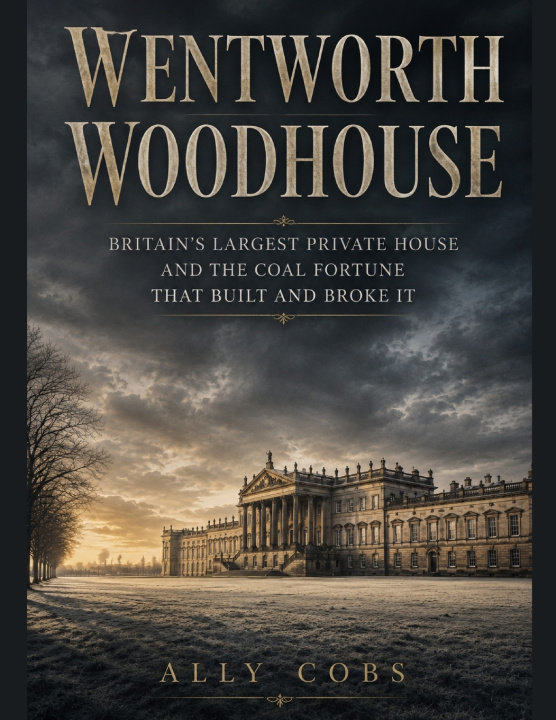
Wentworth Woodhouse
Britain's Largest Private House and the Coal Fortune That Built and Broke It
 Inglese
 27 b
27 b
 Nuovi
Nuovi
Fino a 30 giorni per il reso

Somewhere beneath the manicured lawns of Britain's largest private house lies a coal seam that built it, funded it, and very nearly destroyed it.
Wentworth Woodhouse stretches six hundred and six feet along the Yorkshire countryside, longer than the public face of Buckingham Palace, with more than three hundred rooms and five miles of corridor behind its Palladian facade. Almost nobody outside Yorkshire has heard of it. There is no gift shop the size of a barn, no place on the standard tourist circuit. For most of the last seventy years, the house sat closed, leased out, or quietly rotting under a failing roof. Yet this forgotten mansion holds one of the most remarkable stories in English history, a story of unimaginable wealth, family scandal, and a debt that has never fully been settled.
This book traces Wentworth Woodhouse from its origins in a family feud that began with an execution on Tower Hill, through the eighteenth century building campaign that produced two competing houses joined back to back, and into the industrial fortune built on coal that funded a prime minister, hosted a king and queen, and sustained a household staff of eighty five servants for twenty guests. It follows the family through a disputed inheritance that split them into warring camps, a government minister who sent bulldozers into their gardens over what may have been a grudge about a racehorse, and a fire that consumed sixteen tons of family papers before historians could reach them. It ends with a modern preservation trust attempting something never tried before, saving a three hundred room house through public grants and donations rather than the private fortune that built it.
Readers drawn to British history, country house stories, and the lives of the aristocracy will find all of that here. They will also find something the guidebooks rarely mention, the miners who walked to the pit before dawn and the servants whose staircases were built specifically so they would never be seen. Their labor paid for the marble saloon and the six hundred foot facade just as surely as any earl's inheritance did, and their names survive today mostly in census records and wage books rather than in any monument on the estate.
This is a story about who builds a great house, and who actually pays for it once the building is done. It moves through royal visits and coal strikes, courtroom battles over legitimacy, and a restoration bill that now runs into the hundreds of millions of pounds for a house that sold for just seven million. It is a story with genuine achievement in it, and genuine cost, and it does not ask readers to choose between the two.
Wentworth Woodhouse still stands today, larger than almost any private house in Britain, still unable to fully pay for itself after nearly three centuries. This book is an invitation to walk its corridors, understand its debts, and meet the people history nearly forgot.


Informazioni sul libro
Inglese

Regala questo libro oggi stesso
È facile
1 Aggiungi il libro al carrello e scegli la consegna come regalo 2 Ti invieremo subito il buono 3 Il libro arriverà all'indirizzo del destinatarioCiao! Sono Libroamiko, il tuo consulente di libri.
Come posso aiutarti?