
 Contatto
 Come acquistare
Consegna
Guida all'acquisto
 Inglese
 24 b
24 b
 In preparazione
 Nuovi
Nuovi
Fino a 30 giorni per il reso

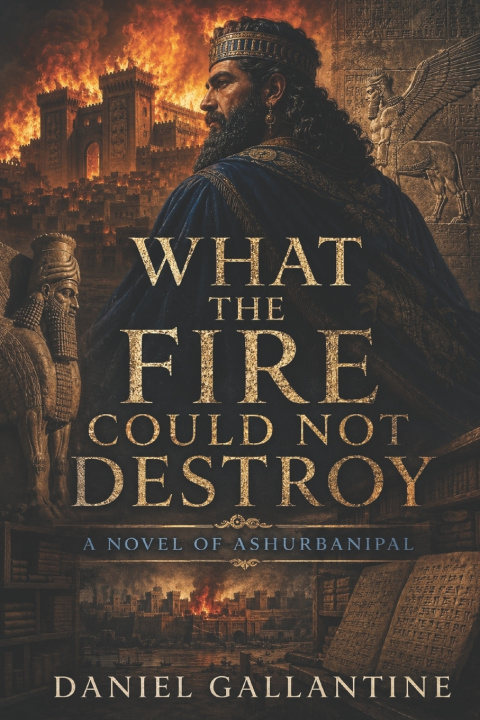
Ashurbanipal is the sixth life in the Ancient Civilisations series. He burned his own brother's city to the ground and rebuilt its temples with the same hand. He assembled the greatest library the world had yet seen, and it survived only because the palace that housed it later burned to the ground as well.
A younger son never originally expected to inherit the Assyrian throne, Ashurbanipal used the freedom of that secondary status to pursue genuine, sustained scholarship, training in cuneiform and divination under the royal scholar Balasi, until his elder brother's unexpected death reopened the entire question of succession. His father Esarhaddon, haunted by his own grandfather's murder in an earlier succession crisis, secured Ashurbanipal's path to the throne through an empire-wide loyalty oath, designating his other surviving son, Shamash-shum-ukin, as the subordinate king of Babylon: an arrangement built specifically to avoid fratricidal violence that would, within two decades, produce exactly the catastrophe it was designed to prevent.
Ashurbanipal's reign began with genuine, demonstrated achievement on both fronts his later reputation would rest on: military campaigns securing Egypt and the empire's western frontier, and the deliberate, personally directed assembly of the largest library the ancient Near East had yet produced, its tablets requested by name through Ashurbanipal's own surviving correspondence. But the humiliating, structural subordination of ancient Babylon to a younger brother's authority in Nineveh festered for years before erupting, in 652 BC, into the catastrophic civil war this novel renders with full historical honesty, featuring a four-year siege ending in documented starvation, his own brother's death by fire rather than surrender, and royal inscriptions describing the slaughtered rebels in language this novel paraphrases rather than soften.
Ashurbanipal's subsequent devastating retaliation against Elam for its support of the rebellion was matched, within the same political program, by his genuine restoration of Babylon's temples and religious institutions, revealing a king capable of holding both extremes in the same reign without contradiction. He died around 631 BC at the genuine height of Assyrian power and cultural achievement, his library complete, his empire at its territorial peak, only for that empire to collapse with startling speed within two decades, culminating in the 612 BC sack of Nineveh, whose fire, by genuine historical accident, baked the library's clay tablets hard enough to survive intact beneath the rubble for two and a half thousand years.
This novel follows Ashurbanipal from a scholar's freedom never meant for a future king through a catastrophic war against his own brother, the brutal aftermath and genuine restoration that followed it, and an empire's collapse that turned the exact disaster meant to erase his achievements into the mechanism of their survival, through to the library's nineteenth-century rediscovery beneath the mound of Kouyunjik, finally restoring to the world the words of a king who could not have known that fire would prove to be the very thing that ensured he would be remembered.
A vivid, unflinching reconstruction of the king whose capacity for devastating cruelty and genuine intellectual passion were never separate stories, and whose library was destroyed in exactly the way that guaranteed it would last forever.
What the Fire Could Not Destroy is the sixth novel in the Ancient Civilisations series.


Informazioni sul libro
Inglese

Regala questo libro oggi stesso
È facile
1 Aggiungi il libro al carrello e scegli la consegna come regalo 2 Ti invieremo subito il buono 3 Il libro arriverà all'indirizzo del destinatarioCiao! Sono Libroamiko, il tuo consulente di libri.
Come posso aiutarti?